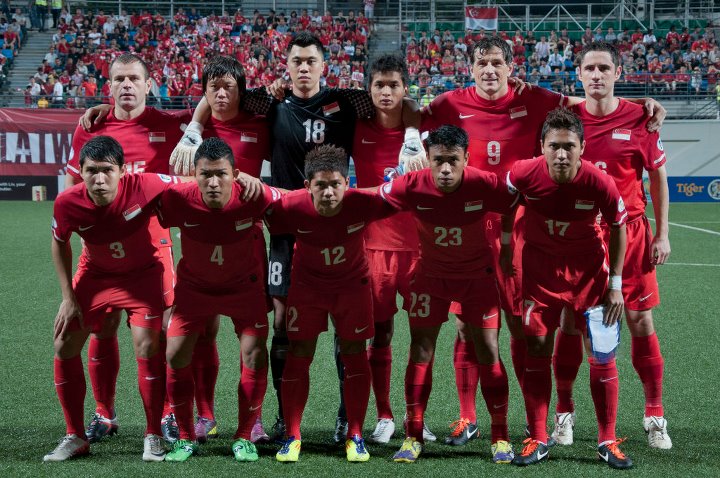
SINGAPORE: Forty per cent of Singaporeans polled in a survey consider football part of Singapore culture, but only 35 per cent said they support local football clubs or the national team.
The Yahoo Singapore Football Study provides an interesting look into how Singaporeans view football at international and local levels. More than 2,000 people participated in the study in July with international research firm YouGov.
One important insight gained is that while only 35 per cent of respondents said they support local football clubs or the national team at present, twice the number—or 70 per cent—said they’d be encouraged to support a local football club or the national team if it met one of their criteria.
And the top three criteria Singaporeans chose are the following: the presence of talented and skilled players (35 per cent), a personal hobby or interest (30 per cent), and a strong team spirit (28 per cent).
Interestingly, different generations showed roughly the same support for local football, with Gen Z leading the pack at 36 per cent, closely followed by Millennials (35 per cent) and Boomers (34 per cent). Gen Xers did not lag by that much, with 26 per cent expressing this sentiment.
However, the survey notes that Singaporeans could be more supportive of local football.
“An exciting narrative emerges as the younger generations could be potential catalysts to elevate the nation’s football enthusiasm to new heights. Gen Z (80 per cent) and Millennials (72 per cent) stand at the forefront, surpassing the national average (70 per cent) in expressing potential interest in local football — citing personal interest as the top criteria,” the report notes.
Survey respondents were also asked which leagues they watch the most, and here are the top three: English Premier League (EPL), UEFA Champions League, and Singapore Premier League (SPL).
Also, when asked whether Singapore can reach Goal 2034, which is for Singapore to qualify for the World Cup in 2034, 37 per cent of the survey respondents disagreed. While 44 per cent remained neutral, fewer than one in five —or 19 per cent—said they agreed that this goal could be reached.
SINGAPORE: Just when the Singapore men’s football team has been eliminated in this year’s Southeast Asian (SEA) Games, a video clip is circulating online where marathoner Soh Rui Yong says the national team needs Chinese players.
The clip, posted on the Yahoo Southeast Asia TikTok account on April 24, was shared on r/SingaporeRaw on Tuesday (May 9).
In it, the outspoken runner points out in a sports podcast that the Chinese, “the dominant race in Singapore,” is not well-represented in the football team.
“Oneof the players I follow in football is Gabriel Quak. I couldn’t name another Chinese footballer whose making waves in the football scene.
“And even Gabriel Quak has now come to the age where I think he’s doing real estate on the side or planning for his exit from football.
“It was always exciting watching Gabriel play. Exciting left-footed winger.”
Mr Soh’s main concern, he explained, is that the “talent pool is limited to a minority race.”
“I mean, don’t get me wrong, I’m not saying that (it) cannot lead to success, but you’re just severely limiting your talent pool,” he added.
Local Reddit users had a lot of opinions on Mr Soh’s take.
“I think the ethnic Chinese in Singapore are just more interested in watching/betting on football than playing it.
“And it’s not as if we stop Chinese from playing football and encourage our Malays and Indians to swim right?” one wrote.
“Chinese are not encourage(d) enough to play sports unless can afford, parents in sports or really outstanding.
How many Chinese parents go crazy if their child missed training but if they missed tuition… God’s wrath,” answered another.
However, one pointed out: “No I think Chinese in Singapore love playing football too. They just don’t see it as a career.”
To this, another answered, “I’m sure many are. We just aren’t that good to want to turn pro.”
One pointed out, “No, turning pro means earning a miserable salary. That’s why the youth players, who are often Chinese, quit. They trained hard for football CCA, and then when they see the path ahead, they nope out. They can earn more using their poly diploma; and some of them qualified for uni.”
Another opined, “We do not have that cultural connection to football like football countries. I think we were pretty good in the 80-90s? When there isn’t so much rules or regulations. Friends just get together at the void deck and play football.”
By Vijay Eswaran, Founder and Executive Chairman of QI Group.
In 2019, Thai Prime Minister Prayut Chan-O-Cha stated ten ASEAN nations will be bidding for the 2034 World Cup, during the ASEAN leaders conference in Bangkok. It was a bold decision which raised eyebrows and decibels around the region, and the world.
FIFA president Gianni Infantino endorsed the move at the time, noting that ASEAN had the “economic and football capacity” to host the World Cup. Infantino alluded to ASEAN’s 650 million population, growing economy and passion for football, saying that it was a great platform to show the world what the region can do.
At the 18th ASEAN Summit, where the presidents of the 10 countries endorsed the proposal to apply for the 2030 World Cup, the notion of having ASEAN host the World Cup was first raised in 2011. The plan was firmly established eight years later at the same summit, and Cambodian Prime Minister Hun Sen reinforced it in June of this year when he said that as ASEAN Chair, he would like all leaders of state and government to support the initiative.
However, because Qatar will host the tournament in 2022, ASEAN will be unable to host the 2030 World Cup because FIFA regulations prohibit staging the event in Asia so soon after it was relocated to this area. The following opportunity for ASEAN to submit a bid is for the 2034 edition.
As the most popular sport in ASEAN, football, hosting the World Cup would have a tremendously positive effect on the country’s economy and sporting events. To put things in context, the Asian Football Confederation was co-hosted by Malaysia, Thailand, Vietnam, and Indonesia in 2007. (AFC). The FIFA U-20 World Cup was held in Malaysia in 1997, and Indonesia will host the competition in 2023. Thailand and Singapore have previously hosted the ASEAN Football Federation’s tournaments, the Tiger Cup and Suzuki Cup. These provide even additional justifications for why ASEAN would be qualified to host such a prestigious event.
As one of the ASEAN nations with history in the region, Malaysia is one of those that could host the world cup if it materialises. Malaysia has a well-established football league structure called the Malaysian Super League, and the authorities have the credentials to oversee major football competitions.
In addition, according to the most current press reports, Shah Alam Stadium would be renovated and have a seating capacity of 60,000–70,000 people. By the time the stadium is finished, which is estimated to be in 2026, there will be more parking spaces available that will be beneficial to many people all over the world as well as the lodgings that will be built next to the stadium. This calls for modernised infrastructure, cutting-edge amenities, and increased security, which is yet another reason why Malaysia should be the ASEAN country to host the World Cup.
The Impact of having the World Cup in ASEAN
Image of a footballer in the World Cup qualifiers holding his flag. From Wikipedia.
The ASEAN community’s principles of economic, cultural, educational, and sporting cooperation will need nations to put aside their differences and work together. The interrelationships between member nations, which take use of the economic power of the world as a whole, would bolster a combined bid and make up for any weaknesses from a possible World Cup host country.
Additionally, ASEAN is a tourist hub. From the vibrant cities of Singapore, Kuala Lumpur, and Ho Chi Minh to the beaches of Bali and Cebu and the historic temples of Cambodia and Myanmar, there is a wealth of attractions for tourists to see and do in the region where people truly want to visit.
The World Cup will bring in enormous amounts of tourism revenue, which will improve the standard of living for many ASEAN citizens.
The Challenges of Hosting the World Cup in ASEAN
Political instability in ASEAN remains the biggest challenge to ASEAN hosting the World Cup. All ten countries have different political systems and political climates, and from now till 2034, multiple elections will take place with constant changes in policies every time a new government is in power, which FIFA will need to deal with.
Another challenge that could potentially have a greater effect on ASEAN countries is the cost of establishing and maintaining tournament venues. To put things in context, Qatar is said to have spent $200 billion on the World Cup this year. Brazil spent approximately US$15 billion to build stadiums, sporting facilities and transportation networks for the 2014 World Cup. Today, the most expensive stadium, Mane Garrincha, which cost US$550 million, is used as a bus parking lot. Russia spent US$14 billion to build new stadiums and refurbish sports facilities to host the 2018 World Cup. Now taxpayers have to cover the maintenance costs of the new stadiums.
ASEAN would then have to unite to make investments in the hopes that the revenue raised will more than cover the costs incurred in World Cup preparations.
A stadium must be able to accommodate 40,000 spectators or more in order to host a FIFA World Cup game. Malaysia has a competitive edge over the rest of the region in this area. There will be no problems meeting the FIFA requirements because the country has stadiums with capacities of over 80,000 people, including Bukit Jalil and Shah Alam in Kuala Lumpur and Selangor, respectively.
The security measures are another important element that need proper monitoring. Security and crowd control would need to be improved along with infrastructure barriers in order to prevent a recurrence of horrible occurrences, for instance, in Indonesia when more than 125 people were killed after supporters stormed the stadium during a league match in October. If the World Cup is to be held in ASEAN, the fans must show restraint, and security measures must be strengthened.
More importantly on the field, which country or countries will represent ASEAN at the World Cup? Historically, the hosting nation or nations of football’s showpiece event automatically qualify for the World Cup. Does this mean that all ten ASEAN countries will automatically qualify for the 2034 World Cup? Even though FIFA has expanded the number of teams participating, this surely will not and cannot happen?
A Joint ASEAN Team
A unified ASEAN team made up of the best ASEAN athletes would be the best course of action, much like the Great Britain team did when London hosted the 2012 Olympics. However, this raises questions about who should be on the committee that selects these athletes as well as how and who should be selected. If a team is selected from among all of the member nations, ASEAN can participate in the competition as a single unit.
Hosting the 2034 FIFA World Cup in ASEAN is feasible. It can greatly benefit the region and its people, but many questions need to be answered and significant work needs to be done and it needs to be done sooner rather than later.
But even so, it’s not a dream we should let go so lightly.
It is for the love of football but fans are also pouring into Qatar from India showing love for Argentina in particular.
Guess what? More than 5,000 Argentina fans, from various nationalities, living in Qatar will welcome visiting the team to cheer La Albiceleste to glory.
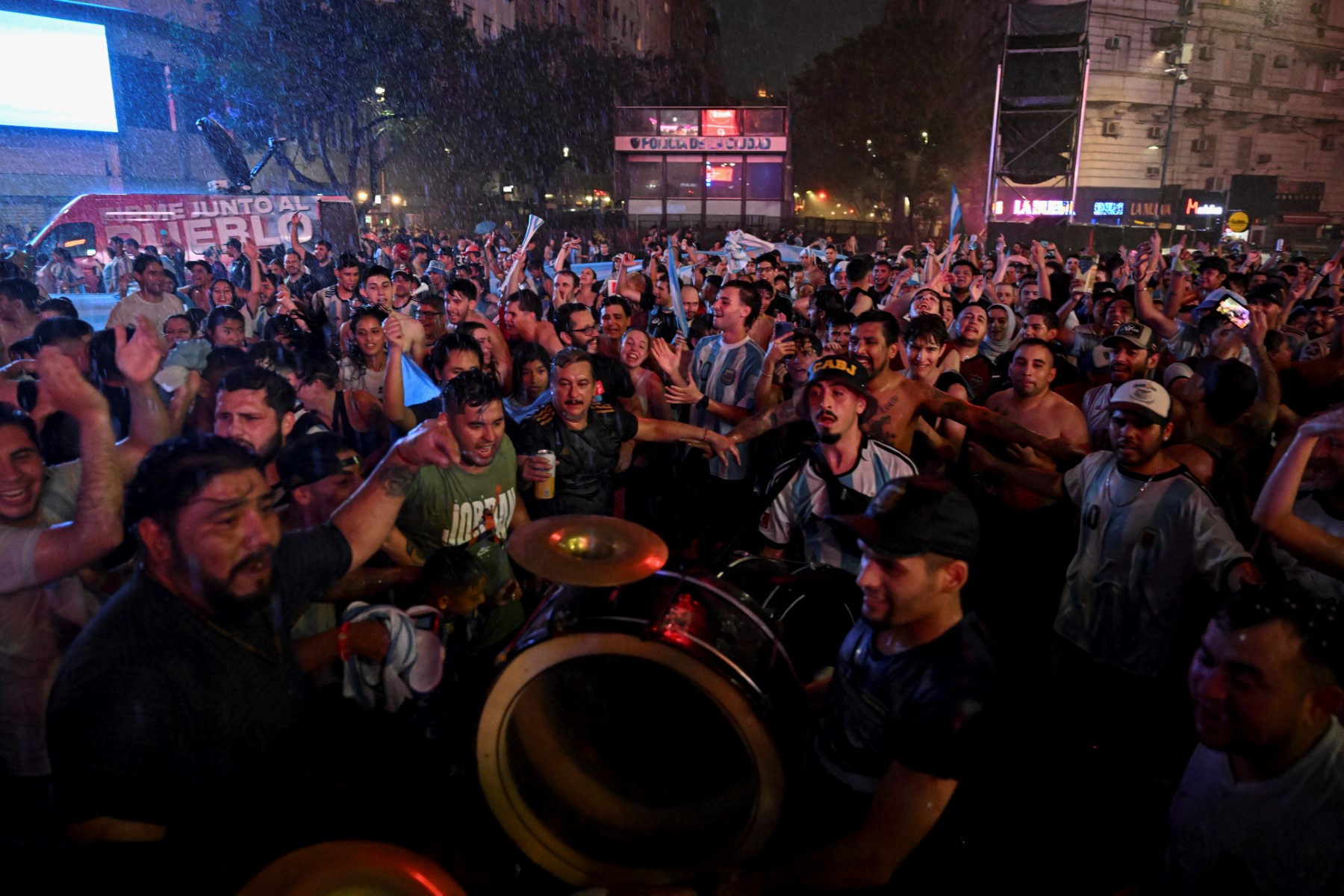
Indian drums drowned out Argentina’s ardent fans as hundreds waited for hours outside Lionel Messi’s World Cup team’s base in Qatar.
The drummers and Indian beat dancers demonstrated yet again how Qatar 2022 will be a unique experience for players and visiting fans. When Harry Kane’s team arrived on Tuesday, subcontinent supporters outnumbered England fans.
When Argentina takes the field against Saudi Arabia in their first World Cup match on November 22, a group of ardent Argentina international supporters will join the travelling Argentinian fans to cheer the country on.
This group of supporters have existed since 1986, the year Argentina won its last World Cup with Diego Maradona. That is well before Lionel Messi, the current super star in the Argentina team, was born.
However, a new group of supporters known as the Argentina Fans Qatar or AFQ was founded in June of this year and this month until December, some fans will be inside the stadium, while others will cheer from the fan zones.
AFQ is the story of die-hard Argentina fans of various nationalities, primarily Indians, Nepalese, Sri Lankans, and Bangladeshis, but also Africans and Qataris.
They all claim their love for Argentina and Messi knows no bounds and since Messi mentioned that this is his last World Cup, the fans are going crazy and will do all they can to watch him for one last time, hoping that Argentina and Messi wins the cup this time.
Argentina is not the only country that has such diehard followers but in this World Cup, some countries may not get the ultimate support from fans.
Love for Football or for England?
In this case, England is likely to pay a price with fans switching allegiance depending on how the England team performs.
According to a study, only one in every four football fans (24%) will stick by the England squad throughout the World Cup.
According to a poll of 2,000 sports fans, one-third would switch allegiances depending on how well the teams perform in the tournament.
More than half would base their support on how “fanciful” the squad is, while 49% would root for a team because they liked the uniform.
In a sweepstakes, 17% said they would support the team drawn at random – rather than their home nation.
And if Wales outlasts the England team, nearly half of England fans will support them.
Almost half (44%) believe England will win the tournament this year, while only 26% believe Wales will take home the trophy.
ARE you ready for a World Cup break as the big-time matches come to a temporary halt?
Perhaps for some, with their favourite teams knocked out, it may well be time for the curtains to come down.
There have been multiple views as football fans have been spoilt with countless hours of match action since the World Cup began at the end of November.
During the group stages, there were up to four games per day, and even as we reached the Round of 16 there was no let up in the action, with two games per day keeping football fans engrossed as the likes of Lionel Messi and Kylian Mbappe carried their sides to the quarter=finals.
The subject of multi-national fans leaving early was put to Qatar’s head coach Felix Sanchez before his side’s second game against Senegal. But he skilfully dodged it as members of the country’s FA, and indeed FIFA, would have looked on.
THE REAL SUPPORT
I must admit that support for the hosts has been there during this tournament, but you can hardly describe it as vociferous. Many locals also seem to follow another, ‘bigger’ country or indeed an individual, such as Christiano Ronaldo.
I notice, too, that many seem to support multiple teams and players. And that is fine of course. We can rightly question some of the Qatari laws, but we also have to respect cultures and the people’s relationship with football is among those.
Just because they don’t want to congregate en masse in bars, sing songs about how much they detest opposition players and generally put everyone on edge doesn’t mean they are not enjoying themselves.
ARE YOU BORED?
The big question: Is Qatar, hosting the world’s biggest sports tournment, bored of the football already?
It is impossible not to wonder what will become of the country after the tournament, although we already know some elements. For example, the distinctive and temporary Stadium 974, and its 974 shipping containers, will be deconstructed entirely, while the Al Janoub Stadium, the home of Al-Wakrah SC, will have its capacity halved from 40,000 to 20,000.
It’s a fact that after the World Cup is won, the buildings adorned with football superstars are returned to their normal status and the excellent Metro system removes the signs for stadiums that adorn every station.
ROARING SUCCESS?
It is highly likely that Qatar, with its tremendous flow of oil-wealth, evenlaunch a bid to host something else, perhaps not discounting the Olympics, in the very near future.
The cycle of preparation and transformation can then begin again, with sport again used as the tool that the country want it to be. I was told that they will point to this World Cup as a roaring success, cite the sometimes confusing attendance records and, rightly, point to the overwhelmingly positive behaviour of fans.
Truth has to be told if the actual football has captivated the nation though. What do you say?
For many, the lack of games over the next couple of days might not be noticed. But as we approach the final stretch of the tournament with the best eight teams in tow, it’s worth the wait to see who finally picks up the prestigious World Cup.
Hey, your guess may well be as good as mine to who deserves to return homeas 2022 WorldCup supremos.
* Suresh Nair is an award-winning sports journalist who is also a qualified international coach and international referee instructor.
CAN the number of football fans coming to Qatar seriously offer an indication to the brewing success of the world’s biggest tournament?
Only a little over 765,000 visitors reportedly landed up in Doha in the first two weeks of the FIFA World Cup 2022, falling well short of the expectations of the Arab country.
Qatar, which became the first Arab country to host the showpiece football event, had expected an influx of around 1.2 million visitors.
It’s highly unlikely that the number will double in the next 10 days even as a blockbuster quarter-finals line-up awaits the World Cup. With only eight teams left in action, Qatar is unlikely to meet their expected target, according to multiple media reports.
The report which identified the numbers was prepared by the Supreme Committee for Delivery and Legacy (SC), which organises the tournament. And half of the 765,000 have now left the country at the end of the Round of 16.
PEAK PERIOD
The peak period which the organisers expected for visitor influx was between November 24 and 28 during which the action-packed group stages was heading towards its climax.
There was plenty of action during the group stage as teams like Japan, South Korea and Australia and African sides Senegal and Morocco pulled off a few surprises with former champions Japan and World No. 2 Belgium being shown the door.
The report registered 1.33 million match ticket holders and 3.09 million tickets sold across the eight stadiums for the World Cup, which will end on December 18. The stadium attendance at the first 52 matches was 2.65 million.
Notably, FIFA president Gianni Infantino claimed record-breaking viewership for the group stage, saying the action in the first phase of the World Cup was one of the best in the history of the tournament.
‘INCREDIBLE EXCITEMENT’
“Fantastic atmosphere, great goals, incredible excitement, surprises, small teams beating big teams,” he was reportedly quoted.
“Well, there are no more small teams and no more big teams. The level is very, very equal.
“For the first time as well, national teams from all continents going to the knock-out phase, for the first time in history. This shows that football is really becoming truly global.”
The organisers were expecting more visitors to flock to Qatar for popular matches and after the country lifted entry restrictions for nationals and residents of fellow Gulf states.
It is learnt on Tuesday, hundreds of Moroccan fans flew into Qatar on special flights arranged ahead of their team’s victory over Spain. Similar fights will be laid on to allow last-minute fans to fly in from overseas to watch their teams advance through the tournament’s final three rounds.
POINTS OF ENTRY FOR FANS
The points of entry have also been very restrictive, too. Visitors to Qatar must obtain a Hayya identification card ahead of travel as it doubles as a mandatory entry visa during the tournament period. But on Tuesday, Qatar dropped this requirement for Gulf Cooperation Council (GCC) countries.
Some surveys have also shown that the Qatar World Cup stands as one of the most expensive in the history of the sport in terms of tickets, accommodation and alcohol sales, which is also banned at the stadium.
“Staging it for the first time in the Middle East marks massive steps and risks for the organisers,” says award-winning Singapore coach Jita Singh, now in Doha, with his family.
“But most view it, even including me, as a once-in-a-lifetime chance to see thebest football tournamentover a month.”
* Suresh Nair is an award-winning sports journalist who is also a qualified international coach and international referee instructor.