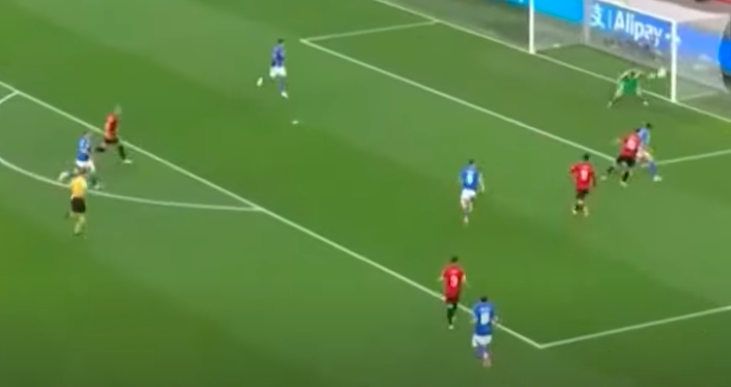
Nedim Bajrami’s goal, which stunned Italy just 23 seconds into the encounter in Dortmund, gave Albania an explosive start to their European Championship record books. It was the fastest goal in the 64-year history of the competition.
A pivotal moment saw Italy’s Federico Dimarco’s throw-in go wrong, giving Bajrami the chance to capitalize and produce the breakthrough. Swiftly maintaining his cool, he controlled the ball and struck with such force that it flew past the goalie and tucked inside the near post.
This momentous accomplishment brought attention to Albania’s skill and emphasized the thrill and unpredictability that characterize premier football competitions.
Dmitri Kirichenko of Russia held the record for the fastest goal in Euro history, having scored against Greece in 2004 after just 67 seconds. This remarkable accomplishment was eclipsed by Bajrami’s lightning-fast strike, which set a new record.
Although Albania lost their opening Group B match 2-1, its passionate supporters will never forget the brief moment when they shocked the reigning champions. Albania is a little country in the Balkans.
Albania’s lightning strike eventually inspired Italy to take more aggressive action and win the game 3-1.
“We interpreted it as a welcome systemic shock.” Federico Chiesa was quoted as saying by ca.sports.”It gave us flashbacks of the final in Euro 2020 when we immediately fell behind.”
On that occasion, the Italians bounced back to draw 1-1 with England and win the penalty shootout. The Italians showed similar character to prevail against Albania.
There were so many red-clad Albanian supporters present that it seemed as if the match was being played in Tirana.
The Albanians’ Brazilian-born coach, Sylvinho, was astounded by the sea of red.
“We knew the entire stadium would be red,” he said, “but outside I saw so many Albanians proud to be here at the European Championship.”
Baumgartner scores the fastest international goal ever
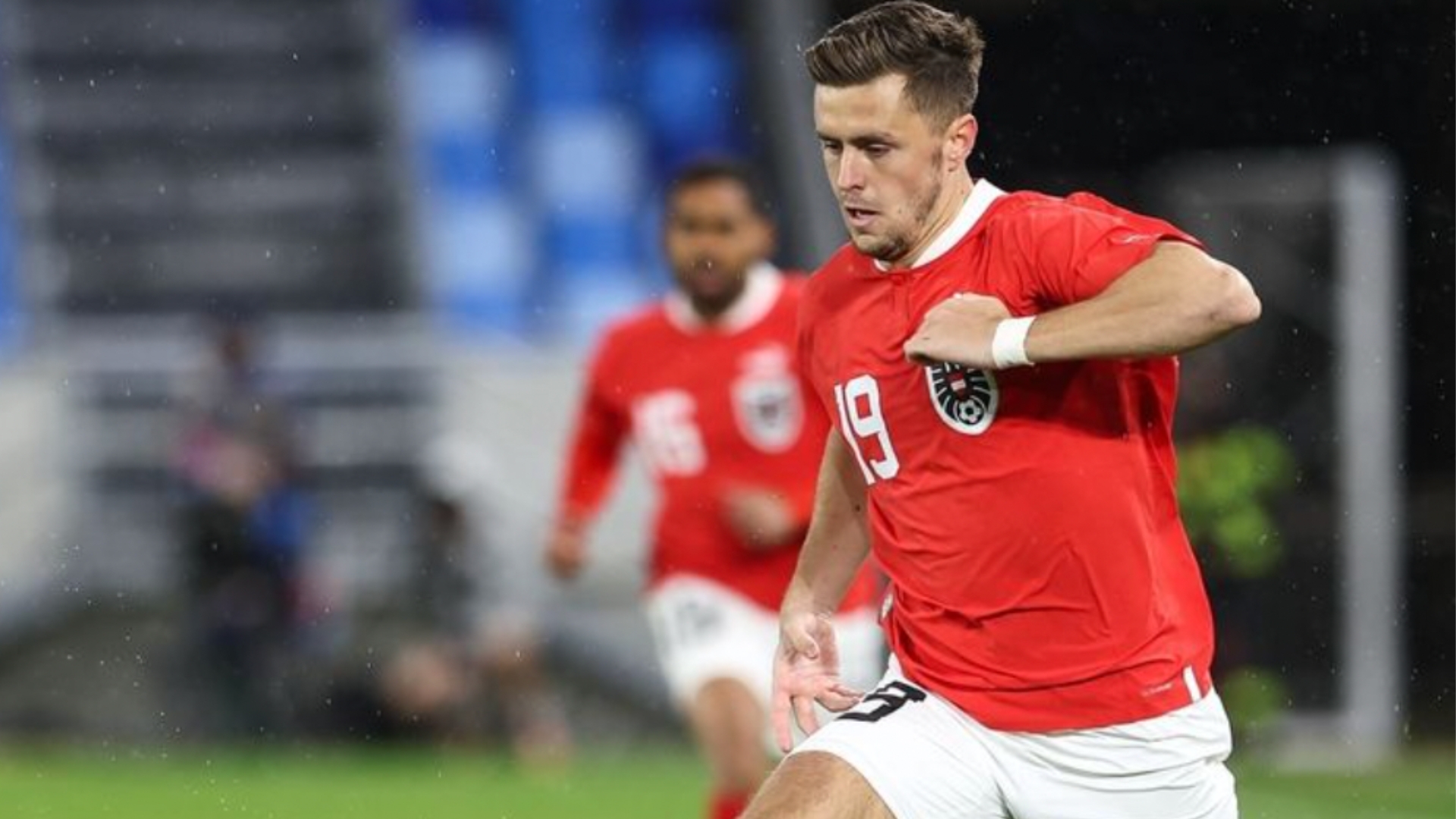
Christoph Baumgartner of Austria made history by scoring the fastest goal in international history in just six seconds of the game against Slovakia, which his team won 2-0.
Guided by his perseverance, he dribbled through the Slovakian defenders after the kickoff, and fired the ball into the net from well outside the box. This caused celebrations from the teams and the audience, and his teammates immediately surrounded him as Austrian fans leaped around the bleachers.
Baumgartner beats Podolski
Baumgartner’s goal was faster compared to the previous record set by Lukas Podolski in 2023, which took seven seconds.
Austria’s second goal came after more than 80 minutes inside the game, and it extended their advantage to seal the victory.
In other news, in a match against France later on, Florian Wirtz of Germany also scored the fastest international goal as they won 2-0. It only took a second longer than Baumgartner to hit the net.
Unfortunately, France was not able to recover from the early setback, and Germany won the match with 2-0.
PRIOR to Sunday’s World Cup Finals, it is appropriate that it’s a two-player show to who will win the ‘Golden Boot’.
France’s Kylian Mbappe and Argentina’s Lionel Messi lead the way in the race as both celebrities have scored five goals so far in Qatar and have one more chance to improve their tallies.
However, Mbappe’s team-mate Olivier Giroud and Messi’s compatriot Julian Alvarez are just one goal behind in the race to finish the tournament as top goalscorer, too, and collect one of football’s most coveted individual prizes.
There is a pack of seven players on three goals, but none of them are still in the tournament after the quarter-finals so they won’t have a chance to add to their tally. So it will be a straight shootout between the players from the final.
You may well ask, what’s the ‘Golden Boot’.
It is the award given to the top goal-scorer at each edition of the World Cup. If at the conclusion of the tournament two or more players are tied at the top of the list with the same number of goals, the award will go to the player with the most non-penalty goals, and if they are still tied, it will go to the player with the most assists.
For the fastest goal in Qatar, Alphonso Davies has been the most alert after the ref’s whistle, scoring after just one minute and eight seconds in Canada’s 4-1 defeat to Croatia.
The next fastest goal comes over two minutes later, a Hakim Ziyech 35-yard chip for Morocco against Canada on three minutes 31 seconds, while Theo Hernandez was also quick off the mark in France’s semi-final against Morocco, scoring within five minutes.
For the most clean sheets, Morocco lead the way here with four clean sheets but having now been knocked out by France, the dark horses could be matched in their achievements by Argentina, should Messi’s team keep a clean sheet in the final.
Other yellow and/or red cards records, South Korea’s Paulo Bento became the first coach ever shown a red card at a World Cup match, during his team’s clash with Uruguay.
Let’s focus on the ‘Golden Boot’ and keep fingers crossed, it goes to a worthy winner.
* Suresh Nair is an award-winning sports journalist who is also a qualified international coach and international referee instructor.
We will never truly know how many other similar conspiracies there were in the past, but I982 will always be remembered as the worst conspiracy involving national teams during the World Cup.
The 1982 World Cup match between Germany and Austria seriously damaged the tournament, and Fifa, the organisation in charge, did nothing to stop it.
It was pure injustice while the world watched on their small TV screens how the Germans and Austrians, the nations that swear by codes of justice, fairness and equality, cheated the Algerians out of the World Cup.
Luizinho (born 22 October 1958) — Brazil NFT Defender (1980–1987). Image from Wikipedia.
The 1982 FIFA World Cup football game between West Germany and Austria at the El Molinón stadium in Gijón, Spain, on June 25, 1982, is known as the “Disgrace of Gijón.”
The minions from Africa shocked the Germans by defeating them 2-1 in a match that soccer fans should watch to celebrate football.
The Germans were in danger of getting eliminated but they had one last match against the Austrians.
A 1-0 win for Germany will mean both the Germans and the Austrians go into round two and the Algerians are ousted.
The game descended into what must be the dullest match to have appeared at any World Cup or any stadium in the world after a German goal in the tenth minute.
Following that, neither team continued to play football as they passed the ball and fired shots into the air to pass the time.
We could argue that Fifa could not do anything about it or that the Algerians should have booked their birth earlier, but they were new to the World Cup and were not that lucky against the Austrians in a match they lost 2-0.
The Algerians had defeated the Chilean team to get 2 more points. In those days, a win in a football match earned a team 2 points and a draw 1 point. (See table below)
Pele Smashed in another World Cup Blunder
Image of Pele in 1968, from Wikipedia.
In 1966, Brazil was again the hot favourites to win the World Cup but their opponents had targeted Pele as the man to bring down. Once Pele is out, they know that Brazil may also be out.
Brazil had won the 1958 and 1962 World Cups though in 1952, Pele played in two matches before he was sent-off the stretcher in the match against Czechoslovakia. It was Pele’s first major injury in his career but he is still credited for the World Cup win. He was part of the squad until the end.
But in 1966, the attacks against Pele became more violent, more personal and it was clear most of the nations in the tournament did not want Pele on the field.
Two-time winners and defending champions Brazil failed to advance to the quarterfinals after Pele was injured in the group matches.
However, some referees did criticise the officials at the World Cup for not stopping the violence against Pele. They believe, until today, that it was not fairplay and that many players should have been red-carded. But the referees watched as Pele was literally gunned-down and out of the competition.
Again, Germany
Frenchman Patrick Battiston’s inclusion in World Cup lore is not due to a goal or display of skill, but rather to the German goalkeeper Harald Schumacher’s unconsciousness during the 1982 World Cup semifinal.
The “Tragedy of Seville” was how Schumacher’s vicious shoulder charge on Battiston came to be known in France.
Battiston, 57, who oversees the youth programme for Ligue 1 team Bordeaux, kept quiet for a while about the incident, which took place seven minutes after he came on as a substitute. He sustained a few missing teeth, rib injuries, and vertebral damage.
In the end, after so much protection for the Germans in the 1982 World Cup, Italy became the heroes who defeated the mighty Germans in the final. It was then dubbed by supporters as the final where ‘justice was done’. Italy beat Germany 3-1 to win the cup.
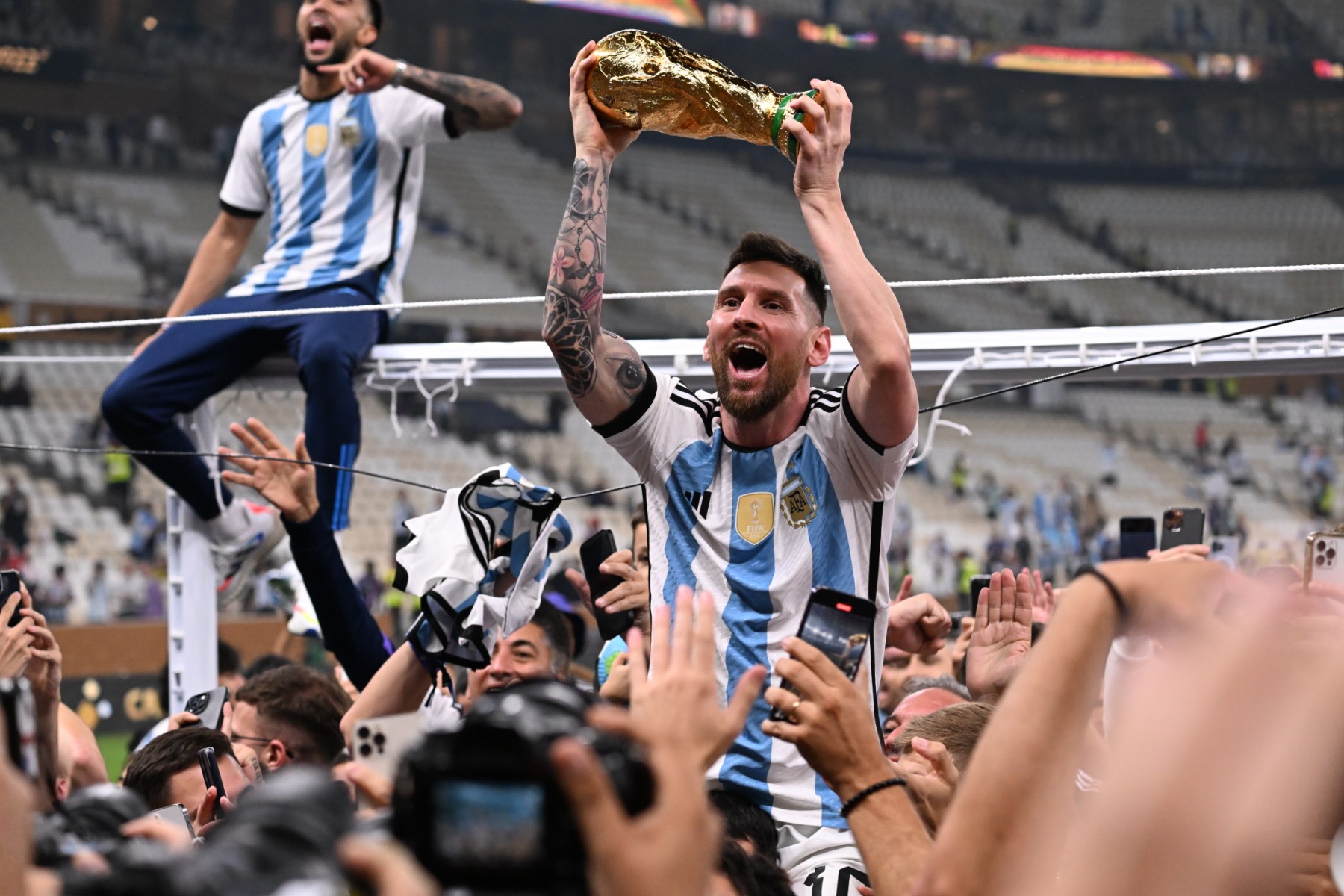
YOU can simply scream yourheads off for Lionel Messi.
For the Argentinian super-striker, it’s more than a dream come true.
He’s now the youngest (18 years 357 days against Serbia & Montenegro in 2006) and the oldest (35 years 155 days against Mexico)player to score and assist in a single World Cup since 1966. Little wonder, he was voted the best player in Qatar.
Former Malaysia Cup defender Matthew Chin hails Messi as “someone close to impossible to match”. He added: My generation can’t compare him to (Diego) Maradona because Messi is simply extraordinary.”
THIRD TRIUMPH
Sunday was Argentina’s third World Cup triumph and the first since Mardona won it for them 36 years ago in 1986 in Mexico. After nearly a month of action filled with exemplary surprises and stunners across 64 games, 172 goals and the dramatic final completed, you just shake your head in disbelief. Just look at the statistics:
Golden Boot Winner 2022: Kylian Mbappe (France) – 8 goals in 7 matches; Golden Ball Winner 2022 (Player of the Tournament): Lionel Messi (Argentina) – 7 goals and 3 assists in 7 matches; Golden Glove Winner 2022: Emiliano Martinez (Argentina); FIFA Young Player Award: Enzo Fernandes (Argentina) FIFA Fairplay Award: England.
Total Goals Scored: 172 Fastest Goal of Qatar 2022: 2nd Minute – Alphonso Davies for Canada vs Croatia; Most Goals Scored: France (16 goals) in 7 matches; Least Goals Scored: Belgium, Denmark, Qatar, Tunisia, Wales (1 goal); Best Defence: Tunisia (1 goal conceded) in 3 matches; Worst Defence: Costa Rica (11 goals conceded) in 3 matches; Hattricks: 2 – Goncalo Ramos (Portugal) vs Switzerland, Kylian Mbappe (France) vs Argentina.
May I significantlly add congratulations to Qatar, having hosted the world’s first desert-terrained World Cup, something thought unimaginable, by football standards.
Sunday’s final between France and Argentina was genuinely a showpiece. In my opinion, in probably the wildest final in the tournament’s 92-year history, Argentina won its third World Cup title by beating France 4-2 in a penalty shootout after a 3-3 draw.
MESSI & MBAPPE
It featuredtwo goals from the 35-year-old Messi and an unusualhattrick by his 23-year-old heir apparent, France striker Kylian Mbappé.
“It’s a very special final for a special occasion for Qatar which had brickbats thrown at them right from the day they first won the World Cup bid,” said award-winning former Singapore coachJita Singh, 74, who spent more than a month in Doha.
“Qatar has truly proved its critics wrong. A small state that is capable of successfully organising the world’s biggest sporting event, after umpteen setbacks on and off the field. Just unbelievable.”
Hats off to Qatar, having hosted the world’s first desert-terrained World Cup, something thought unimaginable, by football standards.
* Suresh Nair is an award-winning sports journalist who is also a qualified international coach and international referee instructor.
While Manchester City coach Pep Giardola said he did not know how his favourite goal scorer this season, Erling Haaland scored the winner against Borussia Dortmund in the Champions League, there are many others who expressed awe and admiration for the player.
What shocked them however, is the way the striker netted City’s second goal against Dortmund.
Sky Sports soccer pundit, Clinton Morrison was lost for words. He watched the wonder goal and said: ‘I can’t explain it!’
He was simply lost for words. But later, he said Haaland is definitely a great goal scorer.
Six minutes from the end of the game, the Norwegian leapt at the back post and hooked an already-impressive Joo Cancelo cross into the net with the outside of his left foot from well above the heads of any defenders in sight.
Haaland now has 26 Champions League goals from 21 games this season, after scoring twice in City’s opener against Sevilla.
That puts him just one behind Luis Suárez, who scored 27 goals in 73 games for Ajax, Barcelona, and Atelico, and within striking distance of other greats such as Wayne Rooney (30/85) and Arjen Robben (31/110).
Other sports portals are saying Haaland’s goal in the 84th minute was outrageous.
During the Borussia match, Guardiola made a triple change and quickly introduced Bernardo Silva, Phil Foden, and Julian Alvarez.
The trio had the desired effect, adding the missing pace and inventiveness to City’s forward play.
City then drew level thanks to a defender. Kevin De Bruyne crossed the ball inside to John Stones, who fired a powerful drive past Alexander Meyer from outside the box.
From then on, the momentum was with City, and Dortmund’s efforts to contain Haaland were futile when Cancelo delivered his magical cross and the Norwegian finished with his full stretch.