India’s head coach Rahul Dravid has urged patience as the team’s potential stars find their footing during their home T20I series against Sri Lanka with a rotating side.
In the second Twenty20 International, played in Pune, India lost to Sri Lanka by 16 runs. The visiting captain, Dasun Shanaka, was named Player of the Match for his outstanding performance with both bat and ball. On Thursday, the season finale will take place in Rajkot.
Wides and no-balls allowed in a Sri Lankan score of 206/6 put bowling discipline under scrutiny in the loss at the MCA Stadium. When India was responding, they were having trouble with the bat and were 34/4 when Suryakumar Yadav (51 from 36 balls) and Axar Patel (65 from 31 balls) attempted to save the situation, but it was ultimately in vain.
In his first over after rejoining the international team, Arshdeep Singh struggled to find his run-up and bowled three consecutive no-balls. He then returned to produce two more no-balls in the last over. As a result of the extra opportunities, Sri Lanka took advantage of his final score of 0/37 from the two overs.
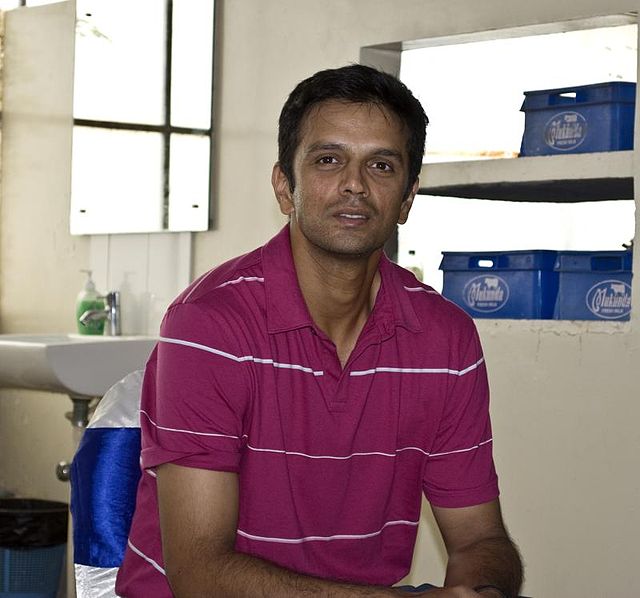
Arshdeep and the inexperienced bowling squad were quickly defended by Dravid for their inconsistent play, saying that time will show results. Regardless of the game’s format, particularly in the T20 version, nobody likes to bowl wides and no-balls.
Dravid stated, “The young children will occasionally play games like this, and I believe we all need to be mindful of the fact that activities like this cannot occur while also being patient with them.”
He then added, “It’s difficult, in my opinion, for them to learn. Cricket at the international level is difficult to learn. You must pick up skills on the job. We’ll probably need to exercise some patience with these guys, in my opinion.”
The second T20I in the three-match series between India and Sri Lanka ended in a loss for India, according to cricket pundits, primarily due to the “no-ball catastrophe.” Gautam Gambhir has also involved himself in the matter.
Thursday’s second Twenty20 match of the three-match series saw Team India lose to Sri Lanka by a score of 16 runs. When Sri Lanka was chosen to bat first by the hosts, Dasun Shanaka’s team scored a massive 206/6 in 20 overs.
While the visitor’s opener, Kusal Mendis, scored 52 runs in a flash for the team, Captain Shanaka hit a storming 56 off 22 balls. India was 57/5 at the start of the tenth over when they lost half of their team while attempting to reach the large mark. The biggest partnership in T20Is for India was constructed at the sixth wicket by saviour Suryakumar Yadav and all-rounder Axar Patel, who hit 91 runs together.
Hardik Pandya and company’s bowling allowed seven no-balls, which resulted in seven free knocks for Sri Lanka during the game. Arshdeep Singh, a pace bowler, bowled the second over of the visitors’ innings and gave away 19 runs overall after three consecutive no-balls went for 10 runs each.
The startling error provided Sri Lanka’s innings with the ideal impetus. Arshdeep bowled two no-balls in the 19th over as well, shocking the crowd even more, and he let up 18 runs in the eight-ball over. The two pacers Shivam Mavi and Umran Malik each gave one no-ball, adding insult to injury for Team India as Sri Lanka built up the sizable target.
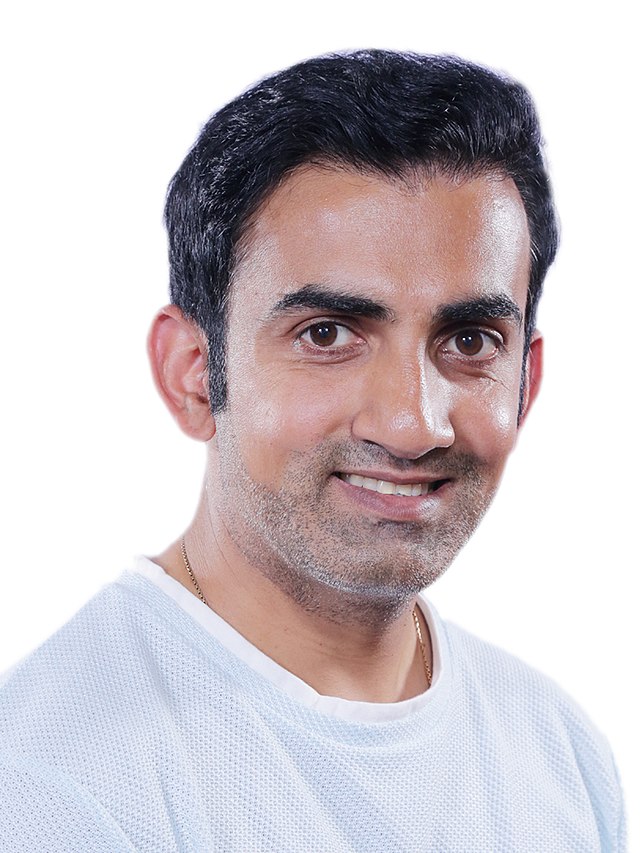
The “no-ball debacle,” according to cricket analysts, was the primary cause of India’s defeat. In the post-game conversation on Star Sports, former India cricketer Gautam Gambhir offered his opinion on the subject. He said that the cause for his inconsistent, non-rhythmic bowling was Arshdeep’s prompt, post-long absence, return to the playing XI.
Gambhir’s actual words
“Seven balls is equivalent to more than 21 overs of bowling. Everyone makes poor throws or plays poor shots, but the key is to maintain rhythm. You should not participate in an international match if you are recovering from an injury,” Gambhir remarked.
“You can get a shocker like I just said. Fielders can make a stunning errors, batters can make poor swing choices, and bowlers can deliver those shocking blows, but this is unacceptable. You may be practicing it in the nets and during practice sessions, which is why you do it during a game as well,” Gambhir explained.
“Therefore, the bowling instructor should likely concentrate on that as well since you need to be strict during practise. You are unable to place the blame elsewhere. Yes, the captain has a difficult time setting the fields. Imagine giving up 30-plus runs in just seven balls after seven no-balls; it would be a significant difference,” he added.
Despite the fact that they occurred a year apart, India’s two T20 World Cup losses have been by a margin of at least ten wickets. Five reasons India didn’t win the T20 World Cup are listed below after a thorough analysis.
India suffered a humiliating loss to England in the semifinals, and as a result, they were eliminated from the T20 World Cup. Despite the fact that it may seem impolite, India’s two World Cup appearances, separated by a year, were both marked by losses by 10 wickets.
It was anticipated that India would revolutionize their approach to T20 cricket after they were eliminated from last year’s World Cup in the UAE with a fresh change of guard and the so-called “new batting blueprint,” but a year later, Indian T20 cricket is still stuck in the same rut.
The vulnerabilities are still very much present if you want to defeat Pakistan in India’s first Super-12 match since Ravi Shastri retired and Virat Kohli gave over the captaincy.
India has lost an ICC competition for the seventh time in nine years, despite coming close once again. The Men in Blue, who once again faltered in a knockout match, are again under heavy scrutiny due to the infamous “C” word, which has come to be associated with South Africa over the years.
This will be a hard pill to stomach for a team that has dominated bilateral series at home and pulled off some memorable victories abroad. While part of it may be the result of tactical mistakes, most of it was caused by underlying issues that came to light when it mattered most.
What were they? After careful consideration, we have come up with a list of five reasons why India was unable to claim the T20 World Cup.
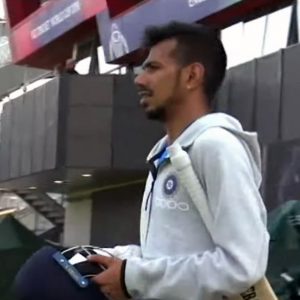
No room for India’s top wrist-spinner Yuzvendra Chahal
Image of Yuzvendra Chahal, from Wikipedia.
No matter what, Only the team management knows why Yuzvendra Chahal is still benched in favor of R Ashwin despite being India’s top limited-overs spinner with 21 wickets from 19 games.
Many people thought India would learn from the error of leaving Chahal out of their T20 World Cup squad last year, but that was not the case. Shadab Khan of Pakistan and Adil Rashid of England frequently caused trouble for hitters with their wrist spin in this event, but Chahal did not receive a single game. Why? We might never find out.
However, it sends out an even worse message if the tactical decision was made with the idea that Ashwin can help you out with runs, as he did by scoring the winning runs against Pakistan and slamming a six and a four against Bangladesh.
India’s renowned top-order deserves a beating and to have their roles in the squad reevaluated if Ashwin the spinner is included in the playing XI as an all-rounder.
Powerplay Confusion: Where did the novel hitting strategy go?
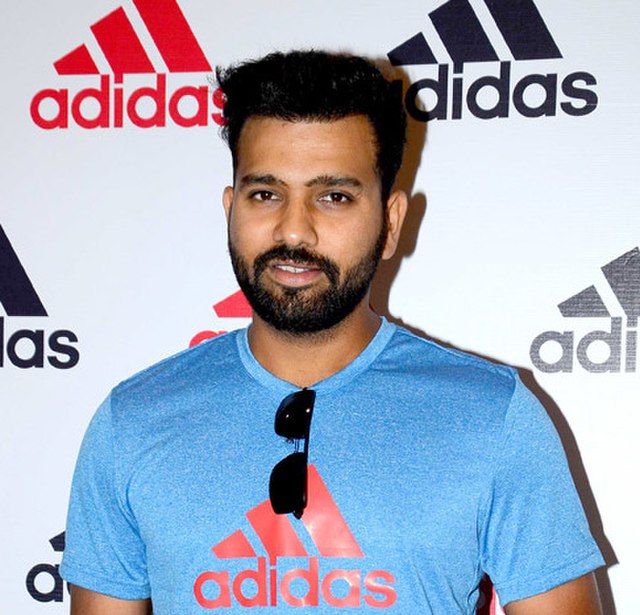
After India lost to Pakistan and New Zealand in the World Cup last year, the epithet “timid” began to represent their batting approach. Sure enough, after Rohit Sharma took over as coach, things changed, even if it meant one of India’s finest batters looked awkward.
Even if Rohit’s fluency was far from perfect, his new role was at the very least interesting. Watching India, led by Rohit, go after the bowling during the Powerplay was refreshing and was predicted to be a game-changer for the team.
DK vs. Pant: Youth over experience is not the way to go in T20s
T20 is a young man’s game, so even with Dinesh Karthik’s recent dives, picking up a 37-year-old for the World Cup seemed a risky choice. Over the years, India has encountered innumerable predicaments that were created for Karthik, situations in which he would have imagined himself saving India.
With the exception of the Nidahas Trophy final, though, Karthik has often missed his chance. Although everyone enjoys a good comeback tale, in T20 cricket, performance is more important than fairy tales. DK’s selection over the hot-shot Rishabh Pant was perplexing on many counts.
The man, who is already a Test match legend, broke the ODI code earlier this year in England with a century.
Maintaining KL Rahul as the leader
Image of KL Rahul, from Wikipedia.
Eight months into 2022, in August at the Asia Cup, KL Rahul played his first T20I match of the year. Rahul did not participate in a single T20I match for India between November 19, 2021, and August 28, 2022, and he was immediately inserted back into the opener’s position.
Since his return, Rahul has amassed four half-centuries, all of which have been achieved at an aimless strike rate. Rahul struck two more 50s during the World Cup—against Bangladesh and Zimbabwe—but each time, Rahul fell short of expectations when the stakes were high.
Rahul resembles a pallid version of himself now. Rahul no longer explodes when he hits a huge six like he used to. Even Rahul, an IPL player for the Punjab Kings, could have benefited India. But unfortunately… It’s time for Indian cricket to move on from him, at least in T20Is, especially with Shubman Gill waiting in the wings and in excellent form.
True tempo is lacking
For India, Bhuvneshwar Kumar and Arshdeep excelled. While the young left-arm pacer, very correctly, established himself as the next big thing in Indian cricket, the seasoned India quick displayed glimmers of his glorious self.
India lacked a true pacer who could consistently hit 145 ticks on Australian pitches, though. The instant Jasprit Bumrah sustained an injury, the alarm bells began to ring, and despite Mohammed Shami’s late SOS—he hadn’t participated in a T20I since November of last year—India had a significant box left unticked.
Rishabh Pant was not selected in either the ODI or T20I teams for India, which will play Sri Lanka starting on January 3.
India’s team announcement
With India’s ODI and T20I teams for the Sri Lanka home series announced on Tuesday, the decisions of the departing selection committee have drawn more criticism. As Rohit Sharma makes a comeback for the ODI series, Hardik Pandya will captain India in the three-match T20I series beginning January 3.
Due to the left thumb injury, he sustained in the second ODI against Bangladesh, Rohit has not entirely recovered. Rahul Tripathi, Shubman Gill, and two young seamers, Mukesh Kumar and Shivam Mavi, have all been called up for the T20I side, giving it a new appearance.
Having taken a break from the Bangladesh series, Suryakumar Yadav is back in the lineup and has been selected as the vice-captain of the T20I team.
Many absences and inclusions were unexpected, with Hardik Pandya upgraded to vice-captain for the ODIs despite KL Rahul’s presence clearly indicating a change in the leadership role in white-ball cricket.
Has Rishabh Pant been benched for the ODIs and T20 Internationals? The thumb injury to Rohit Sharma may still be bothering him, while KL Rahul may not be available because of personal obligations, but why is Virat Kohli’s name missing from the T20I squad?
Does that imply that he won’t be taken into account for the shortest format any longer? Does Bhuvneshwar Kumar share this trait?
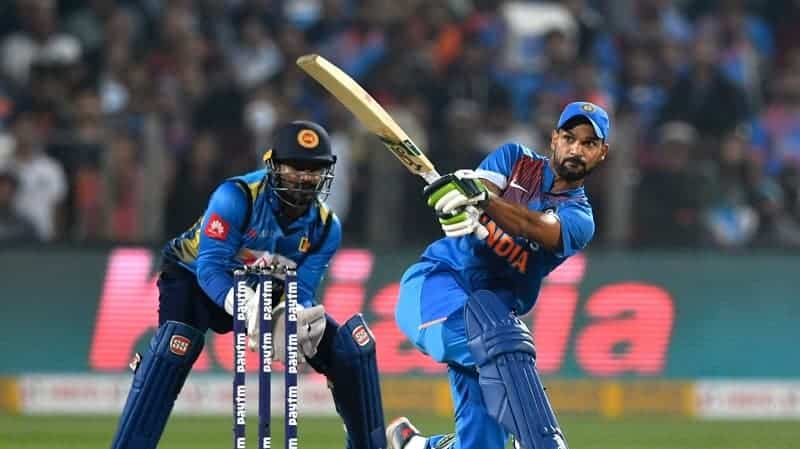
None of the squads mention him by name. Regarding Shikhar Dhawan, what? In the ODI squad for the Sri Lanka series, the player who captained India in the most of ODI series last year has not been named.
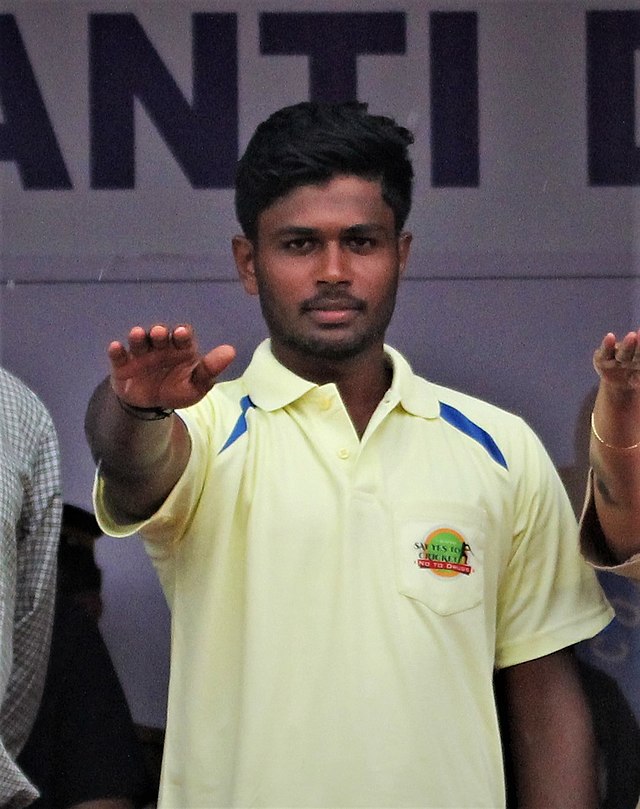
Is he hurt or has he just been dismissed for good? Why was Sanju Samson benched for ODI matches?
The exclusions and inclusions are not explained in any way by the BCCI news release.
“India’s teams have been chosen by the All-India Senior Selection Committee for the next Mastercard Sri Lanka Tour of India, which will take place in January 2023. The tour includes three T20Is and the same number of ODIs.” Apart from the 16 names for the three T20Is and three ODIs, this is all that can be read.
The Sri Lankan team will be visiting Indian soil to play a series that will consist of 2 Test Matches and 3 T20 International cricket Matches. The Test series will form part of the 2021–2023 ICC World Test Championship. The 5 matches will be played differently in India from 25 February 2022 till 18 March 2022. The schedule for the tour was confirmed by BCCI in September 2021. Check Sri Lanka Tour Of India 2022 Schedule, Team Squad, H2h, Prediction, Teams News.
Series
Sri Lanka Tour Of India
Date
25 February 2022- 18 March 2022
Matches
2 Test and 3 T20 International
Administrators
India- BCCI Sri Lanka- Sri Lanka Cricket
The Sri Lanka National Men’s Cricket Team represents Sri Lanka in men’s international cricket. The team is administered by Sri Lanka Cricket and is a full member of ICC with Test, ODI, and T20 Status. The team is Captained by Dasuna Shanaka in ODI and T20 and Dimuth Karunaratne is the test captain. Mickey Arthur is the current coach of the team. Sri Lanka won the Cricket World Cup in 1996, the ICC Champions Trophy in 2002, and the ICC T20 World Cup in 2014.
Administration
Sri Lanka Cricket
Captain
Dasuna Shanaka- T20, ODI Dimuth Karunaratne- Test
Coach
Mickey Arthur
ICC Status
Full Member
ICC Rankings
Test- 8th ODI- 9th T20- 9th
The India men’s national cricket team represents India in the men’s International Cricket. The team is administered by the Board of Control for Cricket in India (BCCI) and is a full Member of ICC with Test, ODI, and T20 Status. Virat Kohli is the test and ODI captain of the team and Rohit Sharma leads the T20 side. Rahul Dravid is the current coach of the team. India has won World Cup twice (1983, 2011), T20 World Cup in 2007, and the Champions Trophy Twice (2002, 2013).
Administration
BCCI
Captain
Virat Kohli- Test, ODI Rohit Sharma- T20
Coach
Rahul Dravid
ICC Status
Full Member
ICC Rankings
Test- 2nd ODI- 4th T20- 3rd
Sri Lanka Tour Of India 2022 Schedule
The Sri Lankan team will be playing 2 Test Matches and 3 T20 Matches in India. The matches will be played from 25 February 2022 till 18 March 2022 in 4 different cities. Let’s have a look at the complete schedule of the Sri Lanka tour of India 2022.
Date
Match
Venue
25 February – 1 March 2022
1st Test
M. Chinnaswamy Stadium, Banglore
5 March–9 March 2022
2nd Test
Punjab Cricket Association IS Bindra Stadium, Mohali
13 March 2022
1st T20
Punjab Cricket Association IS Bindra Stadium, Mohali
15 March 2022
2nd T20
Himachal Pradesh Cricket Association Stadium, Dharmshala
18 March 2022
3rd T20
Ekana Cricket Stadium, Lucknow
India vs Sri Lanka Full Squad for the series
The squads for the series have not been announced yet by respective governing bodies. The information will be updated as soon as the official announcement is made by the respective governing bodies. Till that stay tuned for more updates.
India vs Sri Lanka Head to Head and Predictions
Test series overall Head to Head
Series Played- 17 series
India Won– 9 series
Sri Lanka Won– 3 series
Draw– 4 series
Non-Bilateral/ Tri-Nation Series- 1 (won by the third country)
Test Match Head to Head
Total Matches Played– 44 Matches
India Won– 20 Matches
Sri Lanka Won– 7 Matches
Draw– 17 Matches
T20 Series Overall Head to Head
Total Series Played- 17 series
India Won– 10 series
Sri Lanka Won– 2 series
Drawn– 5 series
T20 Matches Head to Head
Total Matches Played– 19 Matches
India Won– 13 matches
Sri Lanka Won– 5 matches
Draw– 1 match
As per the statistics from head to head and current standings in ICC Rankings, it will be very tough for Sri Lanka to beat the Indian team on their home soil. The last time when Sri Lanka won a Test series against India was in 2008 and will look to change that.
India’s preparations for Bangladesh in a short-handed encounter at the T20 World Cup may fail
The irrational weather gods of Australia have worked together to place this city in an odd region. It appears that Adelaide as a whole has been moved to London.
Unusually cold, wet, and dismal conditions prevail. Even though the weather for the game day is slightly better, it won’t be surprising if rains delay plays because of the persistent rain.
The biggest concern for Rohit Sharma’s team as they enter must-win territory on the only field that can be referred to as a batting beauty in this tournament is the rain, not Bangladesh’s capacity to shock in what is turning out to be a tournament of shocks.
India anticipated dealing with a shortened game at some point. On the eve of the game, the players were only allowed to use the indoor nets since there was a never-ending cycle of mops keeping the water out of the Adelaide Oval covering.
Rahul Dravid, the coach, advised against anticipating or planning for rain. “Its number of overs is unknown to you. When you enter the game, you anticipate that there will be 20 overs, and you act accordingly.
We’ve had good luck because we were able to complete all 20 overs of each of our three games. If tomorrow’s weather makes it necessary for us to play a 10- or 12-over game, we will adapt as necessary.”
In recent years, games between Bangladesh and India have tended to lean one way or the other, including the 2016 T20 World Cup match that India won in Bengaluru by a solitary run. Indian neighbors to the east may begin to think they have a chance if the game is postponed due to rain.
India is dealing with a few significant problems after only losing once against South Africa in Perth. Their starting lineup no longer appears to be as solidly established.
The key discussion points leading up to the game are broken down here.
Will Rahul finally find his groove?
The first-stringer for India scored four goals against Pakistan, nine against the Netherlands, and nine more against South Africa. In a T20 World Cup, where there is no room for error, waiting for someone to find their form is not an option.
Everyone is aware of his potential. Someone who can blow up at the other end in the Powerplay is needed by Captain Rohit. Despite the management of the team’s frequent assurances, this game might be Rahul’s make-or-break opportunity. So it makes sense that Virat Kohli talked with him for a while.