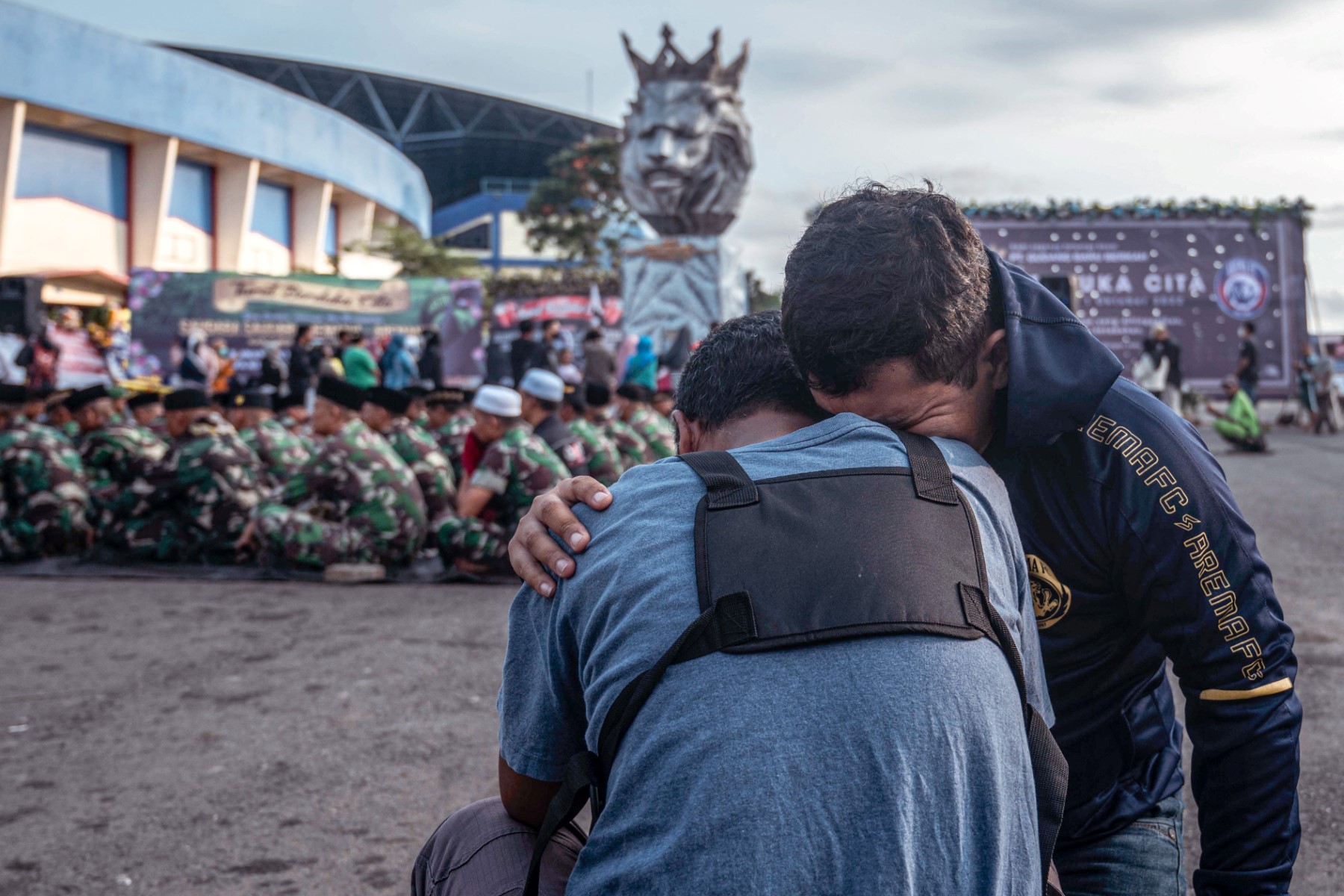
Indonesia is moving fast forward in its dealing with the disaster that struck a stadium where a stampede caused the death of 130 football fans as it plans to demolish the stadium.
But a hasty demolition will not heal the hearts of the people who are still suffering the loss of their children in particular.
However, the demolition is part of a process to ‘thoroughly transform’ soccer in Indonesia, says the country’s President.
He says the demolition will proceed for the rebuilding of the football stadium where the current one stands and where the stampede that killed so many young kids has shocked the nation. Indonesia is a football-mad nation.
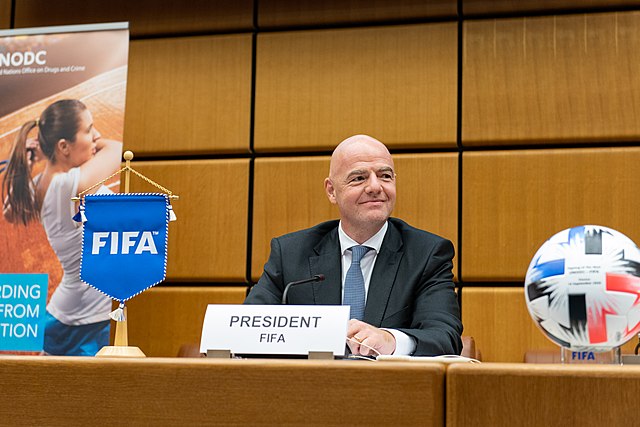
Jokowi, the popular name for the President, met with Mr Gianni Infantino, head of world football governing body Fifa and spoke to the media on plans to rebuild the stadium.
“Kanjuruhan stadium in Malang… We will demolish it and rebuild according to Fifa standards,” he said.
The deadly stampede after a league match in the city of Malang on Oct 1 has been blamed on police firing tear gas in the stadium.
Fifa has banned such crowd control measures during soccer matches, let alone the use of tear gas in stadiums.
A fact-finding team tasked with investigating the stampede has concluded that tear gas was the main cause of death in one of the world’s worst stadium disasters.
This was reported by the country’s security minister on Friday last week.
The team, which included government officials, soccer and security experts, has been investigating how more than 130 people died in a crush after the match on October 1.
Coordinating Security Minister Mahfud MD said other investigations that are ongoing could not “diminish the conclusion that the massive (number of) deaths was mainly caused by tear gas.”
Indonesian Prime Minister agrees with the changes
According to the media, Jokowi agrees with Mr Infantino on significant changes to how the sport was managed in Indonesia.
For Infantino, Fifa’s role is to ensure the security for both the players and the fans.
“This is a football country, a country where football is a passion for over 100 million people,” he said. “We owe it to them that when they see a match, they are safe and secure.”
Football is a beautiful game but when it involves huge crowds, there can be disasters and lives could be lost in the mismanagement of the situation.
The history of football is littered with dangerous moments when people lost their lives either through mobs attacking each other inside stadiums or an infrastructure disaster that could have been avoided.
And Indonesia has now joined the list of terrible disasters that have tainted not only the name of football, but also the country’s organisation of large-scale events.
Delays in unlocking the Kanjuruhan Stadium gates after violence erupted at the end of a football match, according to Indonesia’s national football association, contributed to a crowd crush in which at least 131 people died.
The Football Association of Indonesia announced a permanent ban on the host team’s chief executive and security coordinator for failing to secure the field or promptly issue a command to unlock the gates.
Now, mothers and fathers are up in arms against the country’s soccer association and the authorities, claiming justice for their dead children.
Arema FC fans stormed the pitch after their team lost 2-3.
There are videos showing them throwing bottles and blunt objects at each other.
The first round of tear gas was fired by police, causing mass panic as people fled for the exits. Many people were killed or suffocated in the ensuing stampede.
The parents and the public in general are asking how this could have happened and why did their children die so abruptly.
While answers will come soon, this disaster adds to other such incidents that took place in or around a soccer stadium.
The list of other stadium disasters
The Heysel Disaster
On May 1985, in Belgium, thirty-nine fans died and more than 600 were injured in fan violence before the European Cup final between Juventus and Liverpool at the Heysel Stadium. Link to the video.
It is one of the most talked about stadium disasters in the history of soccer. It is always used as a reference when people speak about fan wars during cup finals.
Hillsborough, Sheffield
The Hillsborough disaster is another of the most well-known stadium disasters. Link to the Video.
On April 15, 1989, 96 Liverpool football fans were killed when they went to watch their team play against Nottingham Forest in the FA Cup Semi Final in the Hillsborough Stadium in Sheffield.
The stadium was packed with 50,000 people. Over 3,000 fans were crammed into a standing-room-only area with a safe capacity of only 1,600 people.
Police opened an exit gate and people rushed inside to relieve a bottleneck of Liverpool fans trying to enter the venue before kickoff.
Nepal, March 1988
In a hailstorm, a stampede towards locked exits at Nepal’s national soccer stadium in Kathmandu killed more than 90 fans.
Guatemala, October 1996
An avalanche of fans fell down seats and a flight of stairs at a World Cup qualifying match between Guatemala and Costa Rica in Guatemala City, killing up to 82 people and injuring at least 147.
Egypt, February 2012
Fans rioted at the conclusion of a match between rivals Al-Masry and Al-Ahly in Port Said. The Egyptian league was suspended for two years after at least 73 people were killed and over 1,000 were injured.
Finally, a great message from the boss of Fifa Gianni Infantino, who has taken the pain to write to all the 32 nations competing in the Qatar World Cup, urging them to “let football take the stage’.
An unusual plea indeed and in his letter, Infantino attempts to defuse concerns over the running of the game.
He says there are many challenges and difficulties of a political nature all around the world, in an attempt to deflect criticism about Qatar and the problems other countries and some NGOs or right groups perceive as inherent to the Muslim nation.
Rightfully so, Infantino says football should not be expected to have an answer to every one of the political and social problems that crop up around the world.
Regarding concerns over the safety of travelling fans in the country he reiterates a promise that “everyone is welcome regardless of origin, background, religion, gender, sexual orientation or nationality”, a more detailed commitment than that currently made by the hosts.
Why so much focus on safety when Qatar is known to be a safe nation to visit, no one knows.
Nevertheless, his message is aimed at the nations that are planning protests during the game or countries that have football stars who want to make a political statement during the matches.
Meanwhile, in Qatar things are moving at a rapid pace with the sounds of building work and heavy machinery still filling the air.
Video displays in the capital city of Qatar are displaying the countdown to the start of the competition that will put the wealthy Gulf state at the centre of the sporting world.
Fifa is urging the nations involved not to focus on the problems internal to the country but to give the most beautiful game a chance to show what the stars are made of, certainly after two harrowing years of lockdowns, deaths and fears of infections from one of the deadliest viruses the world has known.
The Fifa World Cup is to kick off in less than three weeks. Being the most prestigious sports and international event in the world, it will bring a lot of attention to Qatar.
But certainly, most of the fans will shun the criticism against the country and would want to keep watching the games, though they are not unaware that things could be better for some in the Emirates.
But the thing is, it will be the month of football soon and people want to watch great games, great goals while the stars get to showcase their talent and grit on the hot pitches in Qatar.
Since he took over as Fifa boss, Infantino has frequently says the country will deliver the “best ever” Fifa World Cup as well as arguing that the presence of the world’s most popular sporting event will help bring about lasting change in the country.
Qatar’s Population Increase due to the Fifa World Cup
On another note, Qatar’s population grew by 13.2 percent in 2021, as the country hired thousands of foreign workers in preparation for the World Cup 2022, which Doha will host in November.
Qatar’s population reached 2.94 million in September, according to data released by the Planning and Statistics Authority, after 370,000 people arrived in the country last year, the majority of whom were migrant workers.
There are approximately 380,000 Qatari citizens, with the remainder of the population consisting of low to medium-income migrant workers and some high earners with residency and working visas.
Qatar has spent $229 billion to construct highways, seven football stadiums, hotels, skyscrapers, and infrastructure in preparation for hosting the World Cup in 2022.
By Vijay Eswaran, Founder and Executive Chairman of QI Group.
In 2019, Thai Prime Minister Prayut Chan-O-Cha stated ten ASEAN nations will be bidding for the 2034 World Cup, during the ASEAN leaders conference in Bangkok. It was a bold decision which raised eyebrows and decibels around the region, and the world.
FIFA president Gianni Infantino endorsed the move at the time, noting that ASEAN had the “economic and football capacity” to host the World Cup. Infantino alluded to ASEAN’s 650 million population, growing economy and passion for football, saying that it was a great platform to show the world what the region can do.
At the 18th ASEAN Summit, where the presidents of the 10 countries endorsed the proposal to apply for the 2030 World Cup, the notion of having ASEAN host the World Cup was first raised in 2011. The plan was firmly established eight years later at the same summit, and Cambodian Prime Minister Hun Sen reinforced it in June of this year when he said that as ASEAN Chair, he would like all leaders of state and government to support the initiative.
However, because Qatar will host the tournament in 2022, ASEAN will be unable to host the 2030 World Cup because FIFA regulations prohibit staging the event in Asia so soon after it was relocated to this area. The following opportunity for ASEAN to submit a bid is for the 2034 edition.
As the most popular sport in ASEAN, football, hosting the World Cup would have a tremendously positive effect on the country’s economy and sporting events. To put things in context, the Asian Football Confederation was co-hosted by Malaysia, Thailand, Vietnam, and Indonesia in 2007. (AFC). The FIFA U-20 World Cup was held in Malaysia in 1997, and Indonesia will host the competition in 2023. Thailand and Singapore have previously hosted the ASEAN Football Federation’s tournaments, the Tiger Cup and Suzuki Cup. These provide even additional justifications for why ASEAN would be qualified to host such a prestigious event.
As one of the ASEAN nations with history in the region, Malaysia is one of those that could host the world cup if it materialises. Malaysia has a well-established football league structure called the Malaysian Super League, and the authorities have the credentials to oversee major football competitions.
In addition, according to the most current press reports, Shah Alam Stadium would be renovated and have a seating capacity of 60,000–70,000 people. By the time the stadium is finished, which is estimated to be in 2026, there will be more parking spaces available that will be beneficial to many people all over the world as well as the lodgings that will be built next to the stadium. This calls for modernised infrastructure, cutting-edge amenities, and increased security, which is yet another reason why Malaysia should be the ASEAN country to host the World Cup.
The Impact of having the World Cup in ASEAN
Image of a footballer in the World Cup qualifiers holding his flag. From Wikipedia.
The ASEAN community’s principles of economic, cultural, educational, and sporting cooperation will need nations to put aside their differences and work together. The interrelationships between member nations, which take use of the economic power of the world as a whole, would bolster a combined bid and make up for any weaknesses from a possible World Cup host country.
Additionally, ASEAN is a tourist hub. From the vibrant cities of Singapore, Kuala Lumpur, and Ho Chi Minh to the beaches of Bali and Cebu and the historic temples of Cambodia and Myanmar, there is a wealth of attractions for tourists to see and do in the region where people truly want to visit.
The World Cup will bring in enormous amounts of tourism revenue, which will improve the standard of living for many ASEAN citizens.
The Challenges of Hosting the World Cup in ASEAN
Political instability in ASEAN remains the biggest challenge to ASEAN hosting the World Cup. All ten countries have different political systems and political climates, and from now till 2034, multiple elections will take place with constant changes in policies every time a new government is in power, which FIFA will need to deal with.
Another challenge that could potentially have a greater effect on ASEAN countries is the cost of establishing and maintaining tournament venues. To put things in context, Qatar is said to have spent $200 billion on the World Cup this year. Brazil spent approximately US$15 billion to build stadiums, sporting facilities and transportation networks for the 2014 World Cup. Today, the most expensive stadium, Mane Garrincha, which cost US$550 million, is used as a bus parking lot. Russia spent US$14 billion to build new stadiums and refurbish sports facilities to host the 2018 World Cup. Now taxpayers have to cover the maintenance costs of the new stadiums.
ASEAN would then have to unite to make investments in the hopes that the revenue raised will more than cover the costs incurred in World Cup preparations.
A stadium must be able to accommodate 40,000 spectators or more in order to host a FIFA World Cup game. Malaysia has a competitive edge over the rest of the region in this area. There will be no problems meeting the FIFA requirements because the country has stadiums with capacities of over 80,000 people, including Bukit Jalil and Shah Alam in Kuala Lumpur and Selangor, respectively.
The security measures are another important element that need proper monitoring. Security and crowd control would need to be improved along with infrastructure barriers in order to prevent a recurrence of horrible occurrences, for instance, in Indonesia when more than 125 people were killed after supporters stormed the stadium during a league match in October. If the World Cup is to be held in ASEAN, the fans must show restraint, and security measures must be strengthened.
More importantly on the field, which country or countries will represent ASEAN at the World Cup? Historically, the hosting nation or nations of football’s showpiece event automatically qualify for the World Cup. Does this mean that all ten ASEAN countries will automatically qualify for the 2034 World Cup? Even though FIFA has expanded the number of teams participating, this surely will not and cannot happen?
A Joint ASEAN Team
A unified ASEAN team made up of the best ASEAN athletes would be the best course of action, much like the Great Britain team did when London hosted the 2012 Olympics. However, this raises questions about who should be on the committee that selects these athletes as well as how and who should be selected. If a team is selected from among all of the member nations, ASEAN can participate in the competition as a single unit.
Hosting the 2034 FIFA World Cup in ASEAN is feasible. It can greatly benefit the region and its people, but many questions need to be answered and significant work needs to be done and it needs to be done sooner rather than later.
But even so, it’s not a dream we should let go so lightly.
A stadium is a place or venue for (mostly) outdoor sports, concerts, or other events and consists of a field or stage either partly or completely surrounded by a tiered structure designed to allow spectators to stand or sit and view the event. Biggest Football Stadiums. The stadium where football matches are played originally. Watching a football match from a stadium gives us unique experiences where thousands are people cheer for the team.
action and uncluttered scenes can also be spotted with the television casting in the stadium. It’s a perfect opportunity to see and feel our favorite player action in front of us. A list of football stadiums is shown below. They are arranged according to their seating capacity, which is the maximum number of spectators the stadium can seat in sitting zones. All stadiums having a capacity of 40,000 or more that is home to a club or national team is included.
A stadium must have at least that many seats to host FIFA World Cup finals matches. The list includes stadiums that are only used for football and those that are also used for other sports. Some stadiums are only utilized by a team for high-profile events such as local derbies or cup matches.
Top 10 Biggest Football Stadiums In The World
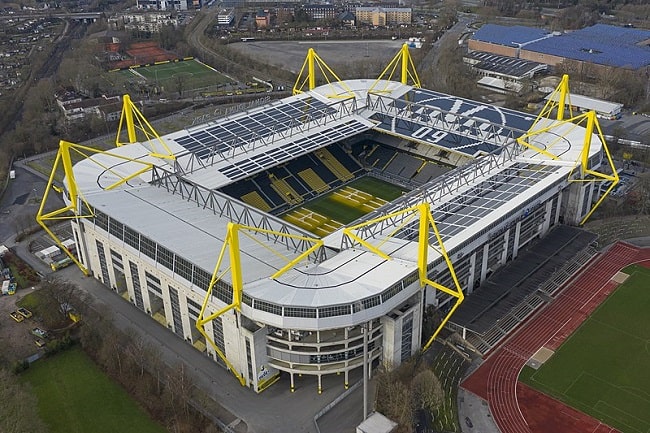
10. Signal Iduna Park
Location: Dortmund, Germany
Opened: 1974
Seating Capacity: 81,365
The stadium is one of the most famous football stadiums in Europe and is renowned for its atmosphere. The best stadium among football fans to enjoy their favorite. The stadium hosted matches in the 1974 and 2006 FIFA World Cups. It also hosted the 2001 UEFA Cup Final.
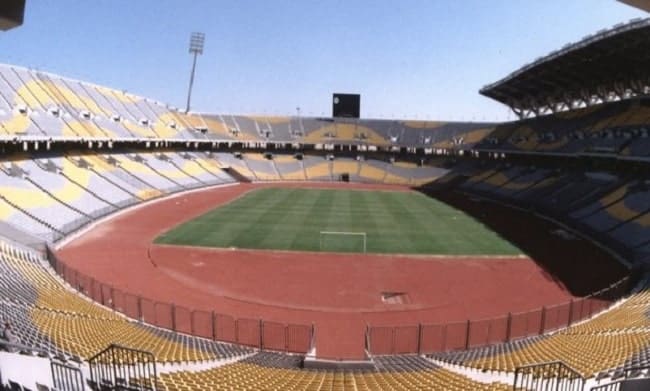
9. Borg El-Arab Stadium
Location: Borg El Arab, Egypt
Opened: 2009
Seating Capacity: 86,000
Borg El-Arab Stadium his stand is also nicknamed the ‘Yellow Wall’. Known for its capacity and size about 86000 spectators seats are available in the stadium. Signal Iduna Park was able to host several games during the World Cups in 1974 and 2006. It is a pretty cool stadium which gives beautiful views of the matches.
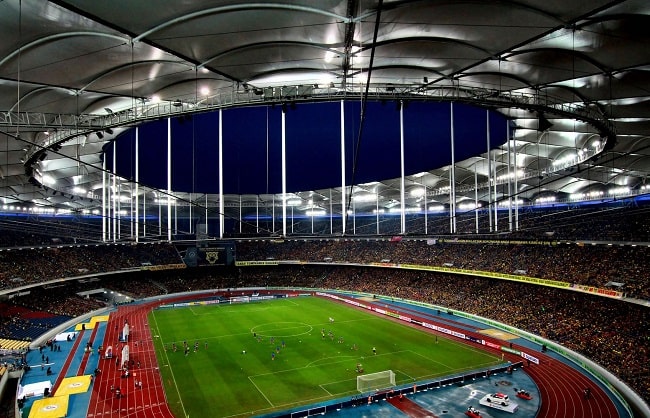
8. Bukit Jalil National Stadium
Location: Kuala Lumpur, Malaysia
Opened: 1998
Seating Capacity: 87,411
The Malaysian national football team may not be high in the FIFA rankings, but that does not stop the national team from building one of the largest football stadiums in the world. The Bukit Jalil National Stadium, which was built at a cost of RM800 million, is a colossus that can hold more than 87,500 spectators.
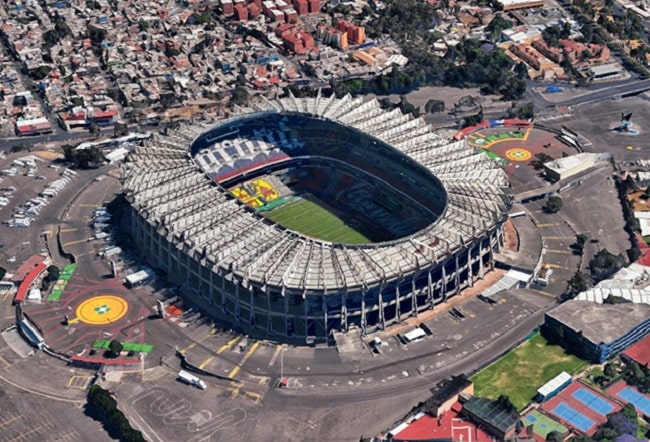
7. Estadio Azteca
Location: Mexico City, Mexico
Opened: 1966
Seating Capacity: 87,525
One of the oldest stadiums of all time which has witnessed two World Cup finals – 1970 and 1986. Also, it is the most favorite and iconic stadium among all this. This stadium also witnessed one of the iconic moments in world football when Diego Maradona came up with the infamous ‘Hand of God’ goal against England in the 1986 World Cup.
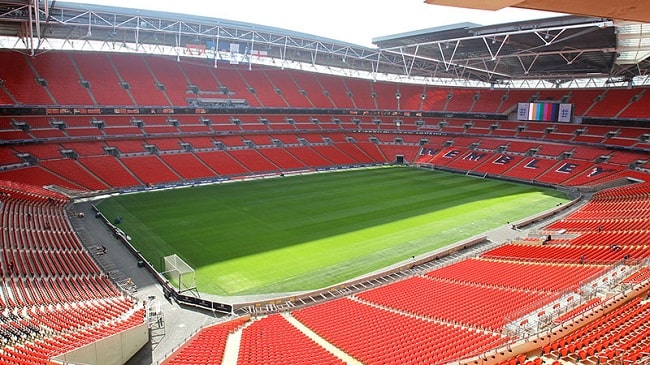
6. Wembley Stadium
Location: London, England
Opened: 2007
Seating Capacity: 90,000
round capacity is up to 90000 spectators seats. The stadium also manages to host 90,000 under a roof – making it the largest of its category. Wembley has already hosted major games like the Champions League final in its modern history. Wembley Stadium is also known for football games.
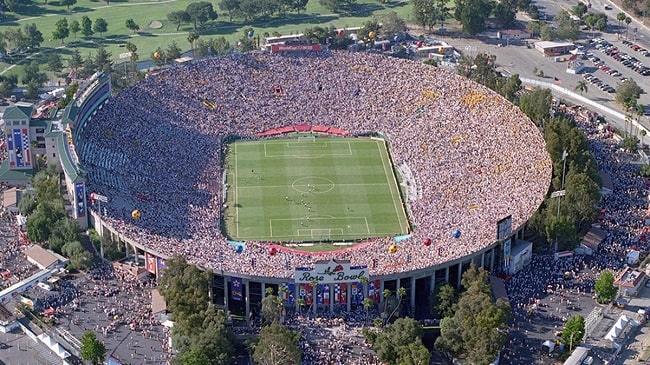
5. Rose Bowl
Location: Pasadena, United States
Opened: 1922
Seating Capacity: 95,542
Ground capacity is up to 95500 which makes it eligible for the biggest ground in the world. The ground is built into the side of the gently sloping hill on which it is located, resulting in an amphitheater bowl. The initial name for the ground was announced in 2000 as The Rose Bowl, in recognition of the club’s rose and crown.
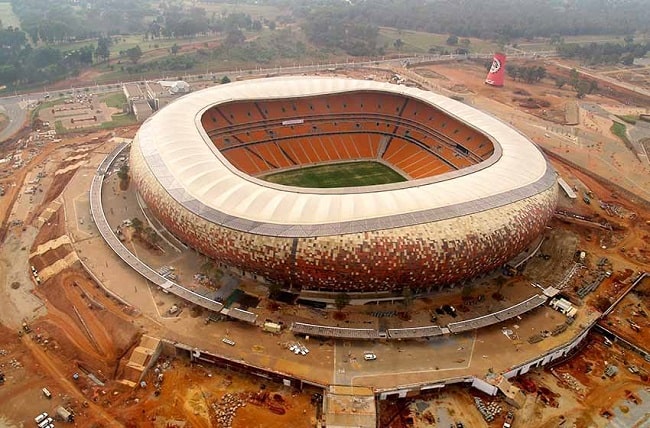
4. FNB Stadium
Location: Johannesburg, South Africa
Opened: 1989
Seating Capacity: 94,736
Dimension: 105 x 68 m
The stadium capacity is up to 95000 spectators seats, FNB Stadium served as the main venue for the tournament. It hosted the opening game, 5 other group games, a quarter-final, a semi-final, the 3rd place play-off, and the final. It was also the venue for the 2010 FIFA World Cup Final.
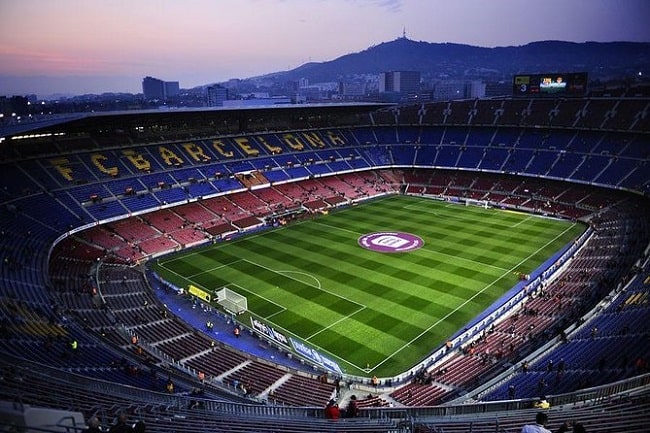
3. Camp Nou
Location: Barcelona, Spain
Opened: 1957
Seating Capacity: 99,354
Dimension: 105 metres x 68 metres(playing area)
The stadium capacity is up to 99000 spectators seats. The stadium is also known for its oval shape design. the Barcelona board has not stopped coming out with expansion projects and the latest is set to add even more seats when it completes in 2024. It’s a home ground for Barcelona with an open rooftop.
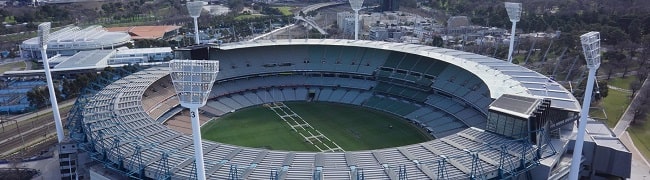
2. Melbourne Cricket Ground
Location: East Melbourne, Australia
Opened: 1853
Seating Capacity: 100,024
Dimension: 172.9m long, 147.8m wide
It’s the second-largest stadium of football about up to 100000 spectators seats. It’s one of the iconic and biggest grounds in the world. it is also known, has been a destination for Australian Rules Football matches, Olympic events, and World Cup qualifiers amongst others. It’s used for multiple sports which makes it a multipurpose stadium.
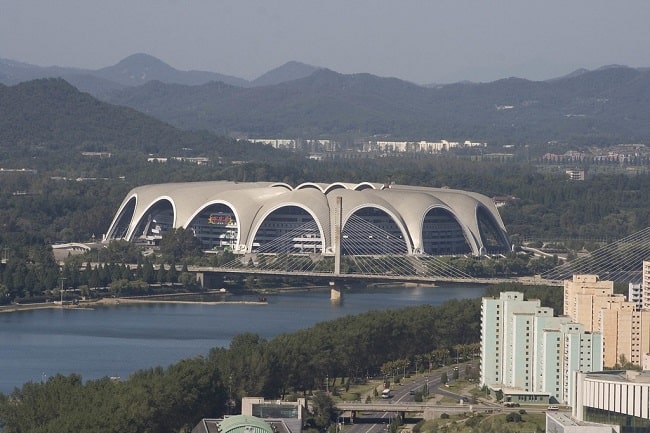
1. Rungrado 1st of May Stadium
Location: Pyongyang, North Korea
Opened: 1989
Seating Capacity: 114,000
As u can see from the seating capacity it’s the biggest football stadium in the world. It allows up to 114000 at a time which is a massive number of people on a particular ground. It’s also the home ground of the national team of Korea. the design of the stadium is in a dome shape giving it a different look.
While Qatar is touting that some of the stadiums hosting the World Cup will disappear after the event, we recall for our readers the fate of some of the majestic stadiums in other countries where the event was held in the past.
The 2018 World Cup in Russia was a fantastic journey for many of the national teams that participated in the tournament. But now, at least 7 of the 11 stadiums built for the Russia 2018 World Cup are not hosting clubs from the top flight.
However, despite regularly drawing crowds of 1,000 to 5,000 for home games, those stadiums must bear operational costs ranging from RUB200 to RUB500 million (approximately RM12.6 to RM31.5 million).
In South Africa where the World Cup 2010 was hosted, the absence of fans at home games caused its World Cup venues to struggle. They do not get enough revenue to sustain themselves financially. with sustaining themselves financially.
The situation is similar in Brazil where many stadiums are now the mark of shame since the end of the devastating World Cup for the nation.
The Middle Eastern country that has constantly been criticised for hosting this year’s World Cup has actually used interesting methods of construction for some of their stadiums. Unfortunately for them, the media focused on the country’s LGBTQ issues and their beer policies.
Most of these issues have been explained by the Qatari officials as a means of safety and precaution. Furthermore, a lot of these rules are in place to make the event a family friendly one.
The country spent around $200 billion for the construction of the sports venue and to provide other preparations for the World Cup in Qatar. For this, they built seven new districts where there are themes related to their local culture.
They created a new city especially for the World Cup. Now they are going to dismantle most of these stadiums once the tournament is over. It will be a radical return to normal for the Muslim nation.