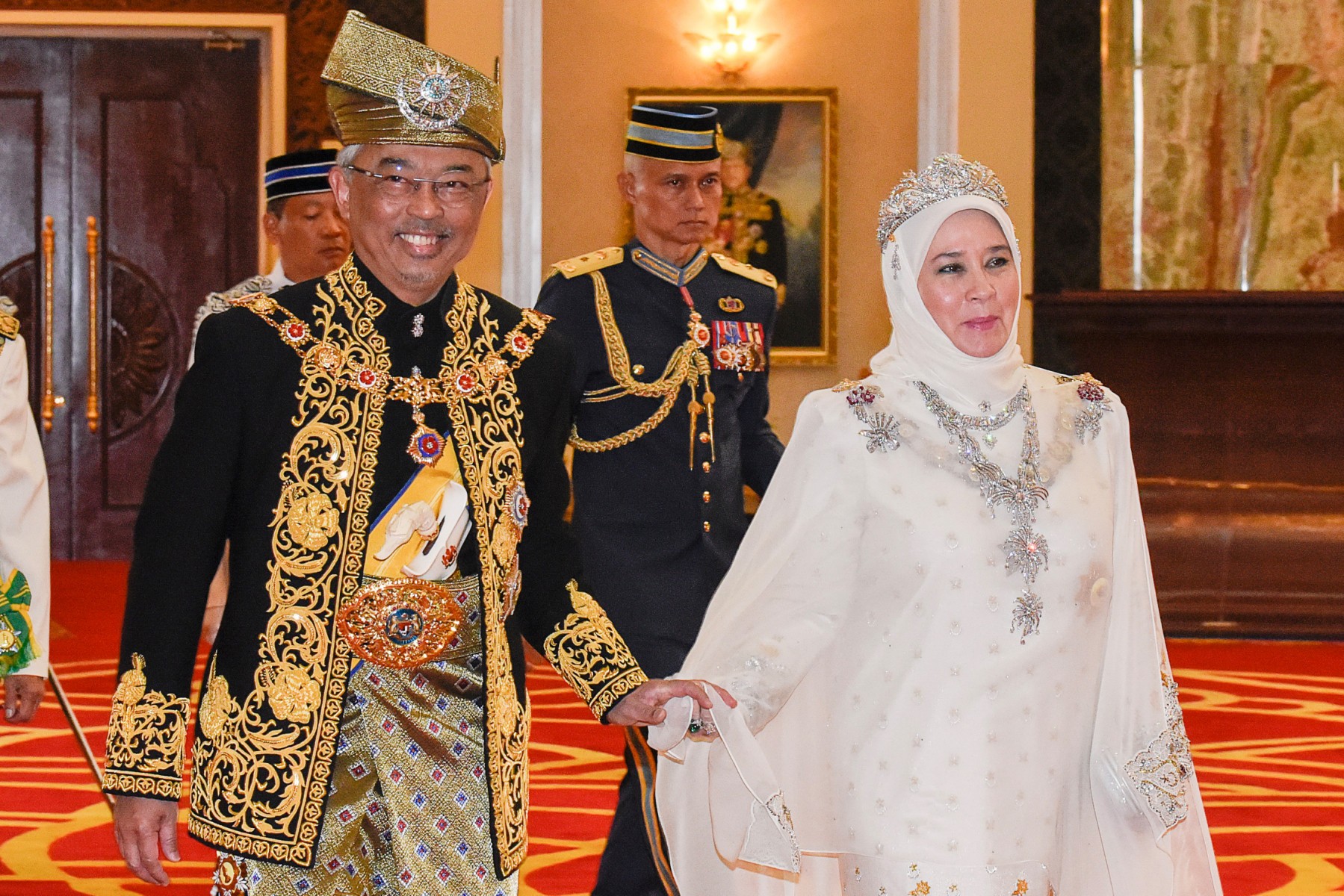
THE football-loving King of Malaysia Al-Sultan Abdullah Ri’ayatuddin Al-Mustafa Billah Shah is in Doha to attend part of the final-ending FIFA World Cup Qatar matches.
The King and his accompanying delegation were received upon arrival at Hamad International Airport by Minister of Sports and Youth Salah bin Ghanem Al Ali and Ambassador of Malaysia to Qatar, Zamshari Shaharan.
His Majesty has long been involved in football, following the footsteps of his late father. They both sat on the FIFA Executive Committee.
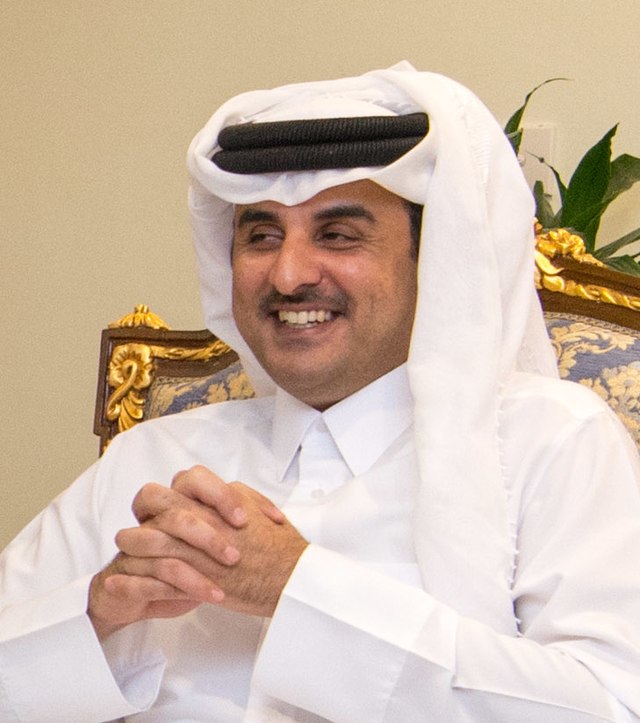
The special Qatar visit was made at the personal invitation of the Emir of Qatar, Sheikh Tamim bin Hamad Al Thani, another football-loving royalty.
COURTESY CALL FOR THE KING
“Apart from the invitation to watch the semi-final and final matches of the World Cup, His Majesty is also scheduled to pay a courtesy call on Sheikh Tamim,” said a statement from the Malaysian Palace.
“His Majesty is also scheduled to grant an audience to several Qatari leaders and attend a gathering with the Malaysian diaspora in Qatar during the special visit.”
Sheikh Tamim’s personal invitation was conveyed by Qatar’s Deputy Prime Minister cum Foreign Minister Sheikh Mohammed bin Abdulrahman Al-Thani to Al-Sultan Abdullah during an audience at Istana Negara on Aug 12.
His Majesty was a member of the Fifa executive committee from 2015 to 2019. He ascended the throne in 2019 at the age of 59, becoming Malaysia’s 16th monarch since it gained independence from Britain in 1957.
ROYAL FAMILIES
Malaysia has an unique constitutional monarchy in which kings have been chosen in turn from the royal families of nine states, and each reigns for a five-year term.
The silver-haired, bespectacled Al-Sultan Abdullah became king after the surprise abdication of the previous king. He was at the time and time before this held the position of Tengku Mahkota Pahang for almost 44 years.In 2016, he was proclaimed as the Regent of Pahang after the approval of the late father, the Sultan of Pahang.
He had to resign from the FIFA post after taking his oath of office as the Yang di-Pertuan Agong in early January 2019.
But his unwavering support for football and hockey was there as he supported the rise of sports in the country. Pahang ranks as one of the most sporting states in Malaysia.
He is an avid sportsman, having represented his East Coast state of Pahang in football matches in his younger days.
With his close sporting interests, he has served as a member of the FIFA Executive Committee and as President of the Asian Hockey Federation.
* Suresh Nair is an award-winning sports journalist who is also a qualified international coach and international referee instructor.
On a great day on December 10, the whole of Qatar, and perhaps the Atab world, was standing and applauding the award of the rights to host the 2022 FIFA World Cup.
History will tell us that Qatar’s the first country in the Middle East to hold such a prestigious and generally profitable competition.
Not only that, if the rest of the world had little knowledge of the rich Middle Eastern kingdom, the World Cup will change that.
In a recent statement, its ruler, Emir Sheikh Tamim bin Hamad al-Thani, says the country has faced unprecedented criticism since winning the bid to host the 2022 World Cup.
He says some of the criticism amounted to slander while some of the earlier criticism against Qatar were constructive.
“We initially dealt with the matter in good faith,” Sheikh Tamim said in a televised policy speech, but he feels a campaign was orchestrated against Qatar and it included ” fabrications and double standards that were so ferocious that it has unfortunately prompted many people to question the real reasons and motives behind the campaign”.
Though the Sheikh did not state that the country regrets the decision to accept the Fifa World Cup 2022, the undertones of his statement can be construed as saying the emirates could have been in a better place without the competition.
However, the country is still focussing on the organisation of the game and has planned sufficient beds for short stays and longer stays.
The event kicks off on Nov. 20 and they expect 1.2 million visitors during the tournament.
And Sheikh Tamim says the whole organisation of the World Cup was “a great test for a country the size of Qatar”.
Attacks against Qatar
Activists and human rights campaigners have in the past months attacked Qatar and threatened countries that will participate in the event that they will be supporting the alleged crimes against foreign workers.
Qatar is also facing the potential outburst of ‘gay right’ activists and soccer players who want to wear a pro-gay arm band to show support to the LGBT community.
Here are more stories related to the FIFA 2022 World Cup.
THIS weekend onwards and for the next four weeks, you will be glued to their television sets for the first-ever desert World Cup – something unimaginable to be happening in Qatar.
The envy of the Europeans, in particular, was plain to see as Qatar has been in the news for all the wrong reasons, anywhere from the deaths of migrant workers to corruption and the organisers anti-LGBTQIA (lesbian, gay, bisexual, transgender, queer (or questioning), intersex, and asexual (or allies) stand.
But as one of the biggest sporting events in the world is about to start at midnight Monday, with host Qatar taking on Ecuador, the focus will hopefully shift to the best of football.
For the record, the first World Cup in the Middle East or West Asia has 32 teams in eight groups and the event that will go on for 29 days will have 64 matches. It’s anyone’s guess who will be rank favourites to win as at least eight teams appear equally matched.
Just look at the eight groups:
Group A: Qatar, Netherlands, Senegal, Ecuador
Group B: England, USA, Wales, Iran
Group C: Argentina, Poland, Mexico, Saudi Arabia
Group D: France, Denmark, Tunisia, Australia
Group E: Germany, Spain, Japan, Costa Rica
Group F: Belgium, Croatia, Canada, Morocco
Group G: Brazil, Switzerland, Serbia, Cameroon
Group H: Portugal, Uruguay, Ghana, Korea Republic
RIGHT FORM COUNTS FOR THE QATAR WORLD CUP
What matters is whoever rises to the right form on match-day in the world’s greatest blockbuster franchise, with a projected cumulative audience of five billion, will be the talking point.
Say what you want, the 2022 World Cup is guaranteed to be a singular experience, for reasons both commendable and skulduggerous.
In my view, this will almost certainly be the tournament where the curtain falls on the international careers of two of the most dominant players of all time: Cristiano Ronaldo, that 37-year-old Portuguese bottle of Drakkar Noir in human form, and his arch-rival, 35-year-old Lionel Messi, the diminutive Argentine with the imagination of a poet-warrior.
What really excites me are the stories of the minnows causing upsets over the big names to go deep into the tournament. From Costa Rica’s landmark run in 2014 – a penalty shootout away from the semifinals – to hosts South Korea going all the way to the final four in 2002.
As Asia prepares to host its second World Cup, the expectation is that there will be a few surprises. To make things more interesting, the Asian contingent is stronger than in recent editions, both in terms of number and quality. Qatar 2022 will see six Asian teams, of which three (Iran, Japan, South Korea) are in the top 30 in the world.
I feel Iran, Japan, South Korea and Australia (an Asian Football Confederation member) are good enough to be competitive in their groups. Hosts Qatar (rank 50) are in a difficult group with the Netherlands and Sadio Mané’s Senegal, but can hope for a result in the tournament opener against Ecuador. For Saudi Arabia (rank 51), things look bad. The team is in Group C with Argentina, Mexico and the Robert Lewandowski-led Poland.
WATCH SAUDI ARABIA
Even one draw in the group can be considered an achievement. But, all three of their non-Asian opponents would be taking the Saudis seriously.
“Saudi Arabia has a solid defence and good tactical awareness,” Lewandowski said in a recent FIFA interview. “They are agile and capable of good build-up play.”
During the qualifiers, the Saudis topped a group that had Japan and Australia. In recent friendlies, it held Ecuador and the US to 0-0 draws, and while it is not likely to progress, the team can have an impact on who makes it out of the group.
So my best advice to you: Stay glued to your television sets, keep your fingers crossed for the first-ever “desert” World Cup, which may well bring upsets-galore.
The writer is an award-winning sports journalist who is also a qualified international coach and international referee instructor.
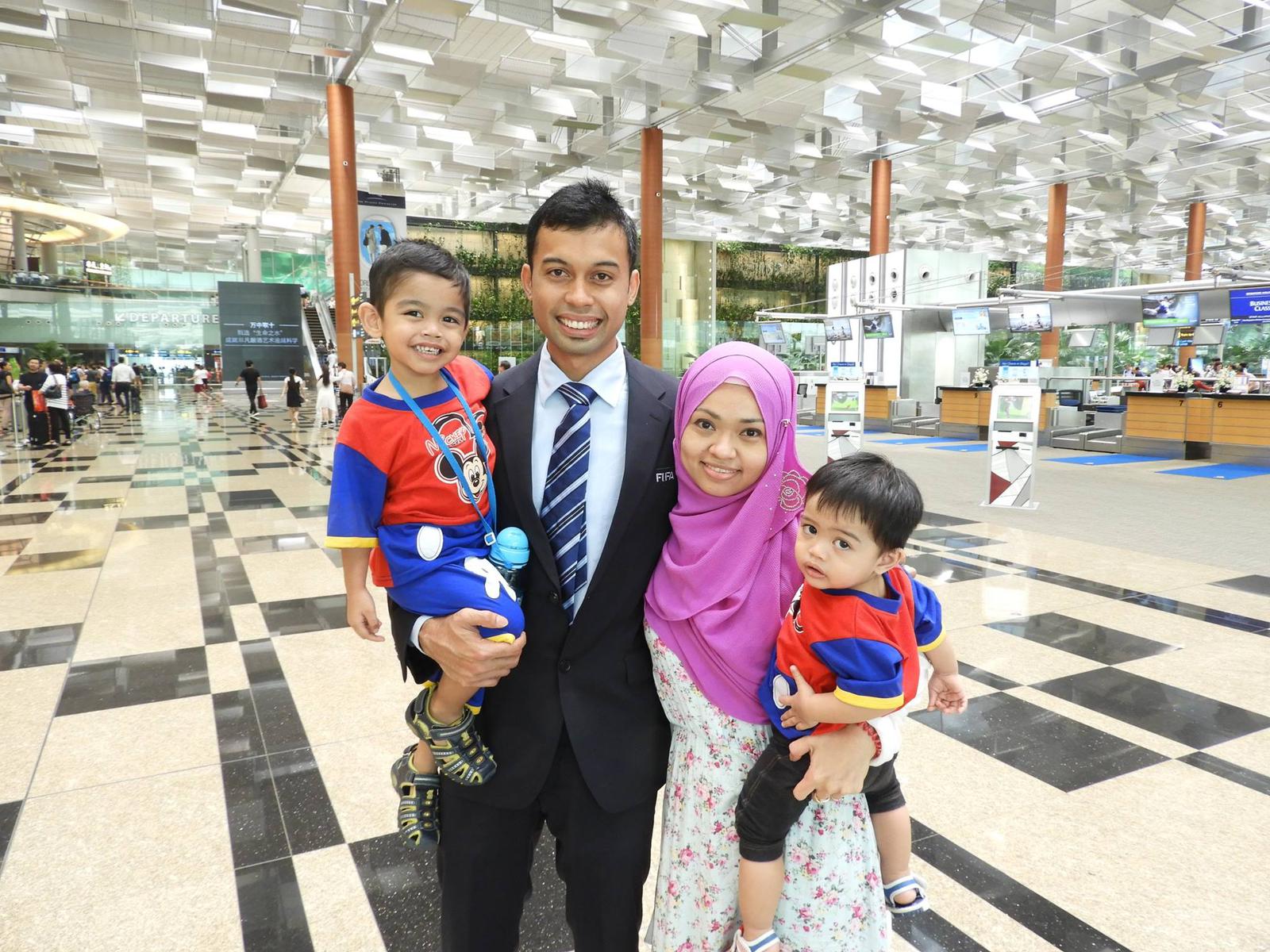
THERE will be a graduate Singaporean in the heartbeat of Qatar’s World Cup, with Muhammad Taqi Aljaafari Jahari, making his debut as a VAR (video assistant referee).
Congratulations!
He will be one of 24 VARs and the only man-in-black from Asean, which is a major feather in his cap.
Reaching this pinnacle of the World Cup, Taqi, who holds a Bachelor of Science (Upper second-class honours),is thrilled he’s following the footsteps of the late George Suppiah, the first Asian to referee at the 1974 Finals in the-then West Germany.
“It was very, very sentimental. I was overjoyed with tears. I didn’t expect this appointment and coming from a country like Singapore, where we are from a very small nation on the world map,” he said.
Only four other Singaporeans had been chosen to officiate at the world’s most prestigious event: Suppiah and Shamsul Maidin refereed at the 1974 World Cup and the 2006 World Cup – both in Germany – respectively, while K. Visvanathan was the assistant referee at the 2002 World Cup in South Korea/Japan and Jeffrey Goh was the reserve assistant referee at the 2010 World Cup in South Africa.
Personally, I know Taqi, the S-League Referee Of The Year in2014 and AFF (Asean Football Federation) Referee Of The Year in 2017, worked very hard for this “dream come true” as he describes it.
He said: “This is something that I really hoped for as the ultimate dream. Your role can be a referee, can be an assistant referee or can be a VAR referee or even can be a reserve referee. But every role that is being assigned in the World Cup, it reflects on the tremendous, hard work that you have done in the past years.”
Taqi’s journey began when he was just 16. As a youngster, he honed his football skills at the void deck with friends. But he eventually joined the hockey team as there was no football co-curricular activity offered in his school.
“Football was just a pastime for us, because we had an interest in football. And we just played football socially among my schoolmates,” he recalled.
“When I took up the refereeing course, it was to know more about the game. There wasn’t any like so-called deep interest into refereeing, just learning the Laws of the Game and officiating matches at the grassroots level, at the amateur levels.”
Normally at 19 years, teenagers aspire to make your debut for your national team, or for the age group team as a football player. But Taqi said: “But for me making a debut as a referee itself, I think it put a lot of pressure on me … because I was facing on the field of play very, very experienced players, whether local players or even international players.”
Congratulations, yet again, Taqi, Singapore salutes you in reaching the FIFA World Cup level.
The writer is an award-winning sports journalist who is also a qualified international coach and international referee instructor.
By Vijay Eswaran, Founder and Executive Chairman of QI Group.
In 2019, Thai Prime Minister Prayut Chan-O-Cha stated ten ASEAN nations will be bidding for the 2034 World Cup, during the ASEAN leaders conference in Bangkok. It was a bold decision which raised eyebrows and decibels around the region, and the world.
FIFA president Gianni Infantino endorsed the move at the time, noting that ASEAN had the “economic and football capacity” to host the World Cup. Infantino alluded to ASEAN’s 650 million population, growing economy and passion for football, saying that it was a great platform to show the world what the region can do.
At the 18th ASEAN Summit, where the presidents of the 10 countries endorsed the proposal to apply for the 2030 World Cup, the notion of having ASEAN host the World Cup was first raised in 2011. The plan was firmly established eight years later at the same summit, and Cambodian Prime Minister Hun Sen reinforced it in June of this year when he said that as ASEAN Chair, he would like all leaders of state and government to support the initiative.
However, because Qatar will host the tournament in 2022, ASEAN will be unable to host the 2030 World Cup because FIFA regulations prohibit staging the event in Asia so soon after it was relocated to this area. The following opportunity for ASEAN to submit a bid is for the 2034 edition.
As the most popular sport in ASEAN, football, hosting the World Cup would have a tremendously positive effect on the country’s economy and sporting events. To put things in context, the Asian Football Confederation was co-hosted by Malaysia, Thailand, Vietnam, and Indonesia in 2007. (AFC). The FIFA U-20 World Cup was held in Malaysia in 1997, and Indonesia will host the competition in 2023. Thailand and Singapore have previously hosted the ASEAN Football Federation’s tournaments, the Tiger Cup and Suzuki Cup. These provide even additional justifications for why ASEAN would be qualified to host such a prestigious event.
As one of the ASEAN nations with history in the region, Malaysia is one of those that could host the world cup if it materialises. Malaysia has a well-established football league structure called the Malaysian Super League, and the authorities have the credentials to oversee major football competitions.
In addition, according to the most current press reports, Shah Alam Stadium would be renovated and have a seating capacity of 60,000–70,000 people. By the time the stadium is finished, which is estimated to be in 2026, there will be more parking spaces available that will be beneficial to many people all over the world as well as the lodgings that will be built next to the stadium. This calls for modernised infrastructure, cutting-edge amenities, and increased security, which is yet another reason why Malaysia should be the ASEAN country to host the World Cup.
The Impact of having the World Cup in ASEAN
Image of a footballer in the World Cup qualifiers holding his flag. From Wikipedia.
The ASEAN community’s principles of economic, cultural, educational, and sporting cooperation will need nations to put aside their differences and work together. The interrelationships between member nations, which take use of the economic power of the world as a whole, would bolster a combined bid and make up for any weaknesses from a possible World Cup host country.
Additionally, ASEAN is a tourist hub. From the vibrant cities of Singapore, Kuala Lumpur, and Ho Chi Minh to the beaches of Bali and Cebu and the historic temples of Cambodia and Myanmar, there is a wealth of attractions for tourists to see and do in the region where people truly want to visit.
The World Cup will bring in enormous amounts of tourism revenue, which will improve the standard of living for many ASEAN citizens.
The Challenges of Hosting the World Cup in ASEAN
Political instability in ASEAN remains the biggest challenge to ASEAN hosting the World Cup. All ten countries have different political systems and political climates, and from now till 2034, multiple elections will take place with constant changes in policies every time a new government is in power, which FIFA will need to deal with.
Another challenge that could potentially have a greater effect on ASEAN countries is the cost of establishing and maintaining tournament venues. To put things in context, Qatar is said to have spent $200 billion on the World Cup this year. Brazil spent approximately US$15 billion to build stadiums, sporting facilities and transportation networks for the 2014 World Cup. Today, the most expensive stadium, Mane Garrincha, which cost US$550 million, is used as a bus parking lot. Russia spent US$14 billion to build new stadiums and refurbish sports facilities to host the 2018 World Cup. Now taxpayers have to cover the maintenance costs of the new stadiums.
ASEAN would then have to unite to make investments in the hopes that the revenue raised will more than cover the costs incurred in World Cup preparations.
A stadium must be able to accommodate 40,000 spectators or more in order to host a FIFA World Cup game. Malaysia has a competitive edge over the rest of the region in this area. There will be no problems meeting the FIFA requirements because the country has stadiums with capacities of over 80,000 people, including Bukit Jalil and Shah Alam in Kuala Lumpur and Selangor, respectively.
The security measures are another important element that need proper monitoring. Security and crowd control would need to be improved along with infrastructure barriers in order to prevent a recurrence of horrible occurrences, for instance, in Indonesia when more than 125 people were killed after supporters stormed the stadium during a league match in October. If the World Cup is to be held in ASEAN, the fans must show restraint, and security measures must be strengthened.
More importantly on the field, which country or countries will represent ASEAN at the World Cup? Historically, the hosting nation or nations of football’s showpiece event automatically qualify for the World Cup. Does this mean that all ten ASEAN countries will automatically qualify for the 2034 World Cup? Even though FIFA has expanded the number of teams participating, this surely will not and cannot happen?
A Joint ASEAN Team
A unified ASEAN team made up of the best ASEAN athletes would be the best course of action, much like the Great Britain team did when London hosted the 2012 Olympics. However, this raises questions about who should be on the committee that selects these athletes as well as how and who should be selected. If a team is selected from among all of the member nations, ASEAN can participate in the competition as a single unit.
Hosting the 2034 FIFA World Cup in ASEAN is feasible. It can greatly benefit the region and its people, but many questions need to be answered and significant work needs to be done and it needs to be done sooner rather than later.
But even so, it’s not a dream we should let go so lightly.
WHO said money and/or rewards doesn’t talk…or even motivate?
The latest streak of financial presents and other monetary awards for toppling the world football giants continue to spur the little-known teams at Qatar.
It’s seldom revealed officially in the media but Saudi Arabia players’ reward with a Rolls Royce Phantom, which can cost up to £480,000, after beating Argentina left a lot of jaws gasping.
They were reportedly gifted with the extraordinary car each by Arab Saudi royalty, something to show that Asian teams can always do the extraordinary at the world’s biggest football show.
PUBLIC HOLIDAY
Saudi King Salman even declared Wednesday a public holiday to mark the national team’s stunning victory 24 hours earlier.
FIFA has also revealed the formal monetary rewards that the teams will receive. The set financial prizes amount to US$440 million. The winner is set to receive US$42 million, whilst the runner-up will receive US$30 million.
Additionally, US$27 million is reserved for third place and US$25 million allocated to the fourth place winners.
RISE IN PRIZE MONEY
The FIFA prize money is in constant growth. This year’s tournament rewards mark a 29% increase from Russia 2018’s prize. Overall, this is an 80% jump since the World Cup in Brazil in 2014.
For the record, there are 32 teams participating in the tournament, which is more teams than any other World Cup. Each team will be earning an extra few million at any stage of the competition.
Motivation comes in plentiful forms but the deserved appreciation never fails to get the underdog teams to further rise to the biggest occasion.
* Suresh Nair is an award-winning sports journalist who is also a qualified international coach and international referee instructor.