There is a 50% chance that soccer players will get dementia. These are the findings of a report in The Lancet Public Health. Scientists say the finding is based on research done on thousands of players in Sweden. Of these, it was found that one in 11 is suffering from dementia.
Dr Peter Ueda from the Karolinska Institute in Stockholm said, “The overall evidence supports the hypothesis that former elite football (soccer) players are at increased risk of neurodegenerative disease, especially Alzheimer’s disease and other forms of dementia.”
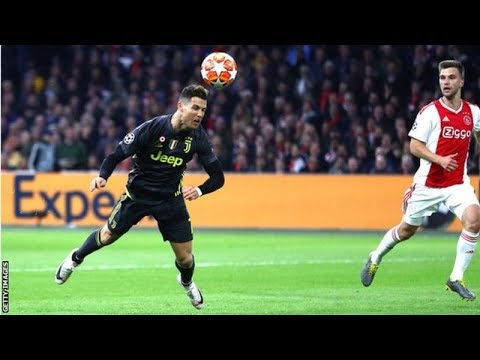
A staggering 537 people out of 6,007 were diagnosed. It shows that heading the ball damages the brain. However, goalkeepers were not at higher risk.
“It has been hypothesized the repetitive mild head trauma sustained, and concussions, might cause neurodegenerative disease. It could be that the difference in neurodegenerative disease risk between these two types of players supports this theory.”
“Male football (soccer) players in the Swedish top division had a 1.5-fold increased risk of neurodegenerative disease compared with population controls who were matched on sex, age and region of residence.”
“Unlike outfield players, goalkeepers did not have an increased risk of dementia – supporting the hypothesis mild head impacts sustained when heading the ball could explain the increased risk in outfield players.”
Another research paper by Glasgow university also showed that former soccer players in Scotland were 3.5 times more likely to get dementia.
“We found a significantly higher risk of neurodegenerative disease diagnosis and neurodegenerative disease mortality among soccer players than population controls. However, the magnitude of the association was not as large.”
“By the late 1990s, almost all top division players had football (soccer) as their full-time occupation. Further research is needed to investigate how exposures associated with health outcomes might differ across populations of elite football (soccer) players,” said Dr Ueda.
For now, children under the age of 12 in England, Scotland and Northern Ireland have already been banned from heading the ball during training or soccer practice.
The SCORES project, based at the University of East Anglia in eastern England, uses online systems to assess individuals’ cognitive function and monitor brain health decline.
The project involves 145 professional footballers, including former Crystal Palace striker Mark Bright and the ex-Norwich duo of Jeremy Goss and Iwan Roberts.
While it found footballers in the 40-50 age group were performing better in the assessments than the general population, this did not hold true as they aged.
The SCORES report data follows research by the FIELD study at Glasgow University, which found footballers were three-and-a-half times more likely to die of neurodegenerative disease than similarly aged members of the population.
That research also led to renewed calls for greater protection for players from concussion and the long-term impact of repeatedly heading a football.
And while the physical exercise associated with being a footballer helped players with their brain health in the years soon after their retirement, that benefit lessened over time.
“When they get to 65 — that’s when things are starting to go wrong,” said lead SCORES researcher Dr Michael Grey.
“The over-65s performed worse when assessed for things like reaction time, executive function, and spatial navigation. These are early warning signs for deteriorating brain health.”
Dr Grey added the SCORES study planned to follow their group of footballers for the rest of their lives.
“This will give us a really clear picture of the potential damage caused by heading the ball,” he said, while adding a larger sample size was needed to produce further conclusions.
The study currently includes 55 former players aged 65 and over, whose results were compared to the 27 non-playing members of the study group aged 65 and over and also to a normative group containing thousands of participants amalgamated from other studies who have done the same tests.
SCORES — which stands for Screening Cognitive Outcomes after Repetitive head impact Exposure in Sport – is also trying to collect more data from former female footballers, amid fears they could be at even greater risk of dementia than their male counterparts.
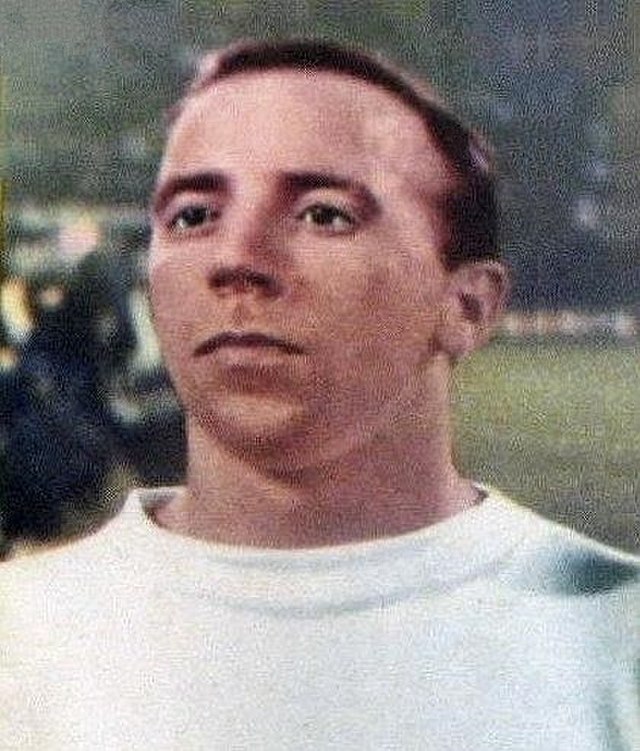
The family of 1966 England World Cup winner Nobby Stiles are among a group of players and their relatives’ families planning to sue the Football Association over their failure to protect players from brain injuries.
Stiles died in October 2020 aged 78 having suffered from dementia. He was found to have chronic traumatic encephalopathy, a progressive brain condition caused by repeated blows to the head.
While boxing has long been a focus of concern, given it allows punches to the head, other sports are now confronting the issue of brain injury.
For example, Steve Thompson is one of scores of rugby union players taking legal action against several governing bodies for negligence.
The 44-year-old, a member of the England team that won the 2003 Rugby World Cup, has been diagnosed with early onset dementia.
Keeping one’s mental health in check is turning out to be just as important in the high-stress world of professional athletics as keeping one’s physical health.
The magnitude of the problem is highlighted by alarming numbers from a recent study carried out by Amsterdam UMC in collaboration with NOC*NSF (the Dutch Olympic Committee and Sport Federation).
The findings of the research cover a wider range of mental health issues that affect athletes on a regular basis in addition to stress. Athletes and coaches report consuming excessive amounts of alcohol (52% and 53%, respectively), which is concerning as it not only impairs performance but also aggravates pre-existing mental health conditions.
Moreover, anxiety, depression, and sleep difficulties are common mental health issues among athletes that are often associated with major life events or serious injuries. This can lead to a vicious cycle of suffering that can affect an athlete’s ability to perform well on their sport as well as their emotional well-being.
Vincent Gouttebarge, a professor of sports medicine at the University of Pretoria and Amsterdam UMC, claims that the findings are consistent with research conducted among elite athletes worldwide and are comparable to the mental health of non-athletes. The professor said: “These are high percentages, but these are self-reported complaints and not serious diagnosed mental illnesses. Nevertheless, sports physicians and other supervisors should pay more attention to the psychological well-being of elite athletes.”
Role of sports organizations
When it comes to helping elite athletes with their mental health issues, sports organizations are essential. Their programs must incorporate the use of psychological assistance and mental health screening equipment.
Athletes frequently ignore or minimize mental health concerns because they feel pressured to always give their best game. Sports organizations may assist players in building resilience, managing stress, and seeking prompt assistance by fostering an atmosphere that values both physical and mental health.
More so, for athletes to obtain the proper care, cooperation between sports physicians, coaches, and mental health specialists is crucial. Coaches may have a good impact on athletes’ performance and well-being by receiving mental health training, which can also help them identify symptoms more accurately and offer appropriate guidance.
Prioritize mental health in sports
Prioritizing mental health evaluations together with continuing education for coaches and athletes can help de-stigmatize the topic and motivate more athletes to get treatment when they need it.
In order to ensure that athletes are prepared to handle the particular demands they confront and have better, longer-lasting careers in sports, the athletic community should instil mental health awareness into the very fabric of sports culture.
After news of Gareth Bale retiring at only 33-years-old this year, let’s have a look at the top five footballers who retired too early.
Bale’s retirement has sparked a number of fans citing that he still has a few more years to go. In contrast, he has older peers like Cristiano Ronaldo and Lionel Messi who are still breaking records at their slightly more advanced age.
However, Gareth Bale is not the only footballer who decided to retire young. There are a number of footballers who retired when they were even younger than Bale for an abundant amount of reasons. Some either returned back to football, not living up to their former glory though, and some instead found opportunities to become managers.
Apparently, according to sportmob, some players even retired as young as 20-years-old. A majority of them retired at around Bale’s age. It seems that it is the most common age group to retire from football.
List of footballers who retired young:
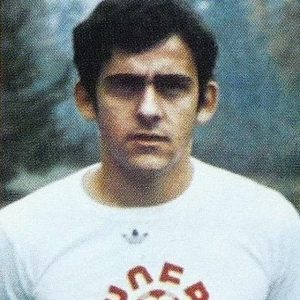
Number 5, Michel Platini
Image of Michel Platini in 1975, from Wikipedia.
Michel Platini, a French footballer whose career only lasted for 15 years between 1972 and 1987 during which he only served three clubs: Nancy, Saint-Etienne, and Juventus. He is one of the rare footballers with three consecutive Ballon d’Or trophies.
His record scores in the European championship, which was 9 scores, was only surpassed by Cristiano Ronaldo in 2021. His record stayed still for a number of decades. Similar to Tuchel, after retiring from football, he became the coach/manager for the French national team.
He retired in 1987 at the age of 32-years-old. During the time when he retired, he was regarded as France’s top goal scorer. His scores were only beaten by Thierry Henry some two decades later.
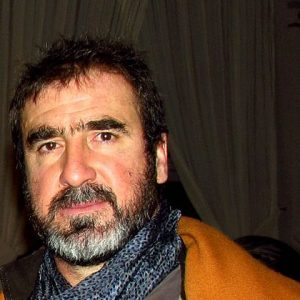
Number 4, Eric Cantona
Image of Eric Contona from Wikipedia.
Eric Cantona, a Manchester United player retired from the club when he was 30-years-old, all the way back in 1997. He announced his retirement a month prior and had no specific reason relating to injuries or any other issues.
He has regretted his early retirement by stating, “When you quit football it is not easy, your life becomes difficult. I should know because sometimes I feel I quit too young. I loved the game but I no longer had the passion to go to bed early, not to go out with my friends, not to drink, and not to do a lot of other things, the things I like in life.”
His achievements in football is not something people forgot as he is still mentioned by some fans to this day. He has had successful roles as an actor and starred in a number of blockbuster films.
Number 3, Ruben De La Red
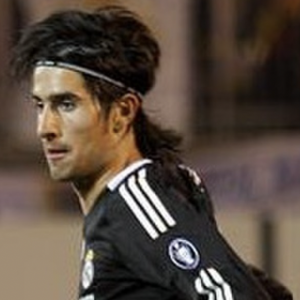
Image of Ruben De La Red from Wikipedia.
Ruben De La Red, a Spanish footballer who retired at the age of 25-years-old. He is regarded to be a product of Real Madrid and has played for only two clubs for the duration of his professional career. His other team was Getafe.
In October 2008, he passed out during a Spanish Cup game against Real Union. As a result, he was taken to the hospital and eventually declared unable to play the balance of the season. Due to his unfortunate heart condition, which forced him to retire early in late 2010.
In 2015 he returned to Getafe as a manager, however this role was short lived as the team was relegated to one tier lower, he then subsequently left the team.
Number 2, Thomas Tuchel
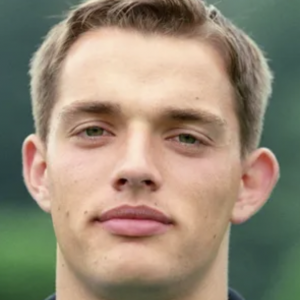
Image of a young Thomas Tuchel, from www.transfermarkt.com
Thomas Tuchel is quite a popular man on Sportsry as we have written a number of articles either about him or ones that are related to him. Many of you may not know that the former Chelsea manager used to be a footballer himself. Unfortunately, he retired at only 24-years-old in 1998.
He was forced to retire due to his knee cartilage injuries. He was quite the prominent footballer in his early days and unfortunately he was robbed of the chance to end up as a legend on the field. However, destiny had another thing coming for Tuchel where he managed a number of prominent European football teams and won trophies for them.
Number 1, Andreas Laudrup
Andreas Laudrup, a 31-year-old Danish footballer born in Spain who had to end his professional career at the young age of 24, similar to Tuchel. He played for just four clubs during the course of his seven-year career: Lyngby BK, FC Nordsjaelland, AS Saint-Étienne, and AGF.
The aforementioned reason for his early retirement was due to his arthritis. Furthermore, his father was a Danish footballer, Michael Laudrup. Unfortunately, he could not live up to his father’s legacy. Who knows, he might be a manager of a prominent team one day and would still make waves in the football realm.
The two youngest retired players from football were only 24-years-old. The both of them had a promising future in this line of work, but fate decided to take them on another ride. For a few that got lucky, they ended up being prominent managers or even movie stars. Regardless, we hope that Gareth Bale will end up somewhere good.
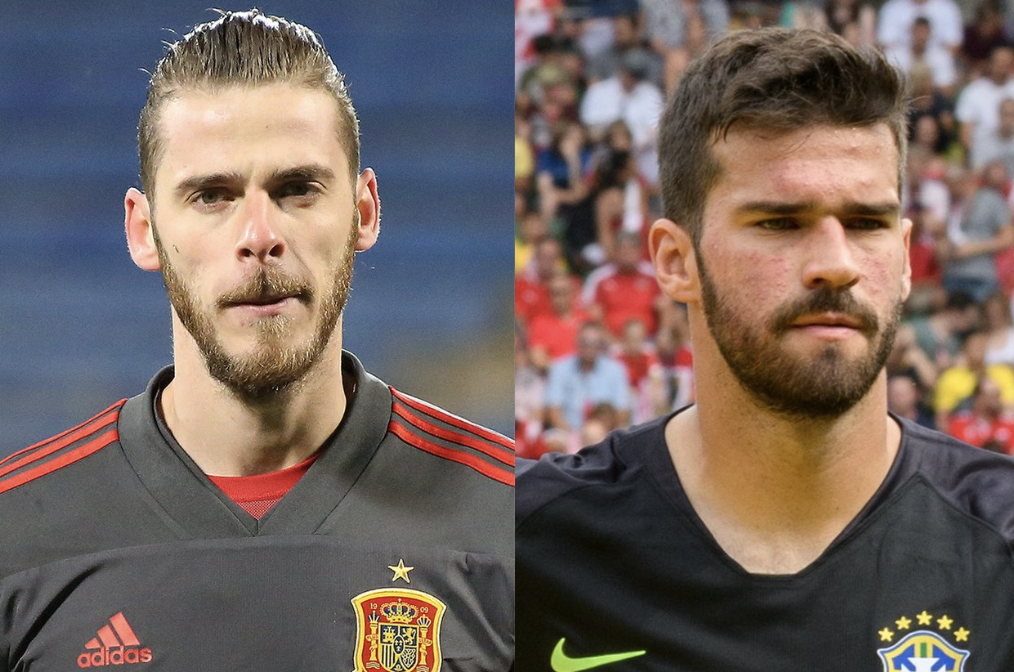
While Alisson Becker, the goalkeeper for Brazil and Liverpool, has recently had some ups and downs, David de Gea, a Spanish professional soccer player, plays as the goalkeeper for Manchester United and the Spanish national team. Who, though, makes a better keeper?
Here is our verdict:
With stellar club and international careers, De Gea and Alisson are widely regarded as two of the top goalkeepers in the world right now.
De Gea has won multiple awards for both himself and his teams, including the Premier League in 2013 and the Golden Glove for the 2017–18 campaign.
Alisson has also received numerous individual and group honours, including winning the Champions League in 2019 and the Premier League in 2020–2021 with the Liverpool club.
They are two players with various playing styles and skills. They followed various career routes, yet they are still in competition with one another both in the league and at international level.
Both are well known for their superb shot blocking skills and control of their respective penalty areas.
But something must give one of them the advantage.
Some critics say De Gea has a flaw, amongst others, because he does not come out often to stop attackers.
But minus this flaw, De Gea has some unique skill sets.
What are David De Gea’s special talents?
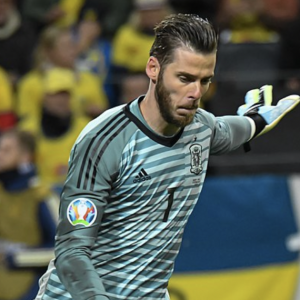
Image of David De Gea from Wikipedia.
Goalkeeper David de Gea is a highly competent and gifted player who is renowned for his quick reflexes and shot-stopping prowess. He is renowned for his lightning-fast reflexes and talent for making challenging saves appear simple.
He is renowned for his capacity to anticipate shots and place himself in a save-making position.
He is also good for his superb footwork and distribution skills from the penalty area. He can accurately pass the ball to his teammates to initiate counterattacks because he is at ease with the ball in his hands.
What about Alisson’s special skill sets?
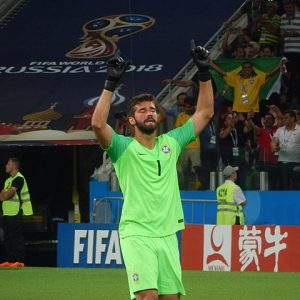
Image of Alisson Becker in the FIFA World Cup 2018, Group E, Serbia vs. Brazil, from Wikipedia.
Alisson is a highly accomplished goalkeeper renowned for his quick reflexes and shot-stopping prowess, which equates his talent to that of De Gea.
Along with De Gea, he also has lightning-fast reflexes and is good for his capacity for anticipating shots and positioning himself to make a save.
As most goalkeepers, he also has an excellent footwork, can relaunch a match with his long throws and shots that helps him to.accurately pass the ball to his teammates to initiate counterattacks.
But perhaps, additionally, Allison is good for his superb positioning and game reading skills, which enable him to efficiently plan out his defence and thwart goals. This is a plus for Allison.
De Gea’s and Allison’s weaknesses
Some experts claim that De Gea lacks presence in his penalty area. Strikers will prowl about him with shots if he is not sufficiently dominant in the penalty area since they will be able to see his weakness.
If he uses his strength in the penalty area, it might have the detrimental—possibly disastrous—effect of making defenders lose faith in their goalkeeper.
Allison does occasionally overplay the ball and get into problems with awkward touches as opponents close him down while he is in possession.
Those self-inflicted moments of worry versus some of the Premier League opponents occurred more than once. But that does not diminish his strength.
To us, Allison wins and De Gea needs to improve a lot to get Manchester United back in the lead at home and away.
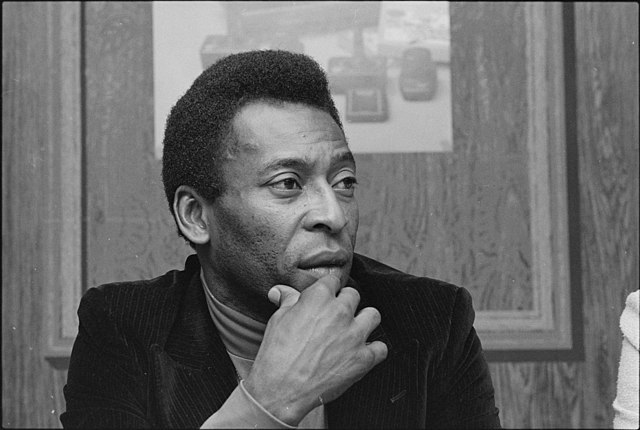
The unfortunate news that Pele had a tumour removed last year, and currently he is in palliative care in Brazil. This means that he has moved to “end-of-life care.” Many are upset as Pele is still remembered by many for broking many records during his time as a footballer.
Just when Brazil started their World Cup campaign he posted a few words of kindness on Instagram. “Today we start writing a new story. No matter the size and tradition of the opponents: we must respect and play each match with the focus of a final.”
“It is important to play beautifully, yes, but it is also essential to leave everything on the pitch. “Today, we will be more than 200 million hearts beating as one, vibrating with each achievement of our Selecao.
“I am sending all positive energies to you. I’m sure we’ll have a happy ending. God bless you. Bring this trophy home!”
Fan reaction towards Pele’s declining health
Everything you see your favourite player doing, Pelé did it first.
On Twitter, he has been dubbed as the “King of Football.” There was another photo where he held three World Cup trophies. He shocked the world with his skills when he was younger and even today, his records are still almost unbeaten.
Fans stated that he is the true greatest of all time as he was light years ahead of the current players that we have today. A comparison between Pele and Messi is that when Pele was 35, he had won three World Cups, while Messi is still chasing his, claimed a fan.
Qatar has lit up the torch tower in respect for the footballer. Some fans were unhappy at the “get well soon” message as they felt that it was inappropriate. Others defended Qatar in writing hopes that he would get well soon as it is better than anticipating his death.
Some comments say Pele is no better than the younger generation of players. However, the backlash they got over such a remark is uncanny. Older football fans educated the younger ones stating that during Pele’s time, footballers were at their peak and Brazil was playing with 100% of their players and still managed to win three World Cups.